September 2025
7 September 2025:
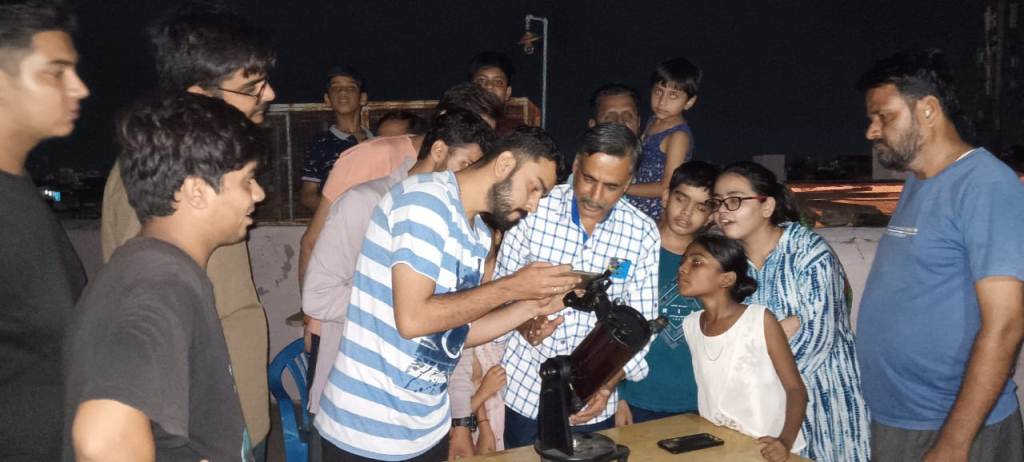
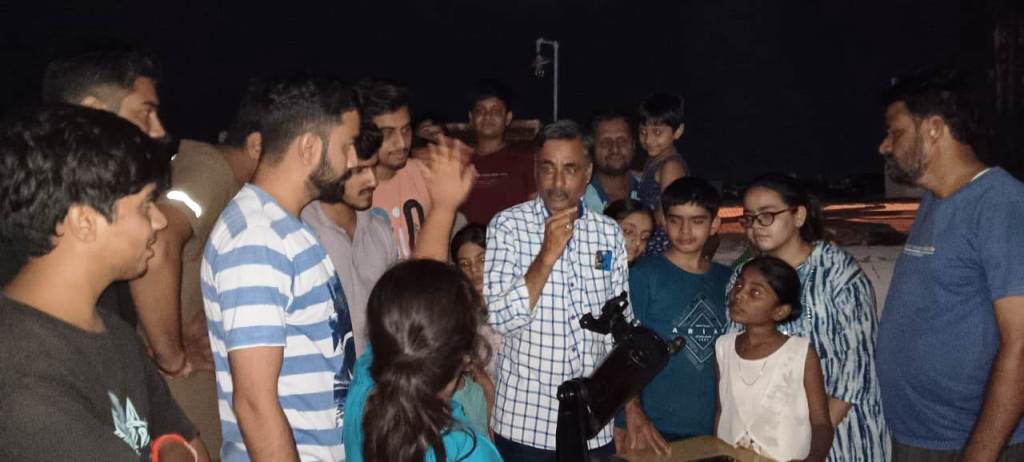
Observing the Lunar Eclipse through a Telescope
On 7th September 2025, the Ajit Foundation Astronomy Club organized a public viewing of the lunar eclipse through a telescope. The event began at 10:00 PM, allowing visitors to observe the celestial phenomenon in real time, with arrangements made for mobile photography as well. Throughout the evening, a large number of children, teenagers, youth, men, and women gathered at the Foundation to experience the awe-inspiring sight of the moon’s gradual eclipse. The program continued until midnight, creating an engaging and educational experience that sparked curiosity and enthusiasm for astronomy among participants.
19 September 2025:
Dialogue and Book Exhibition
Lifelong Learning: National Education Policy 2020
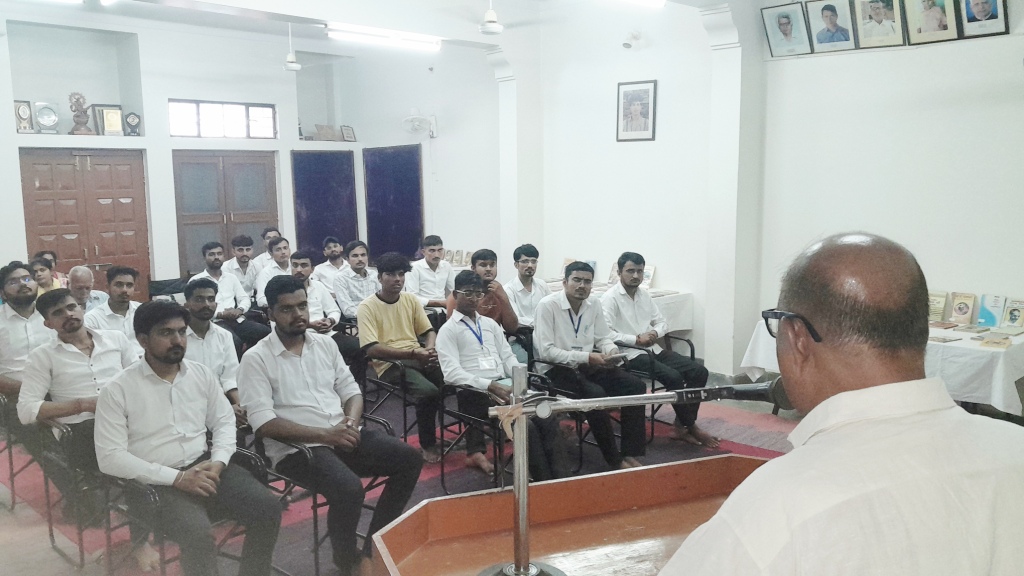
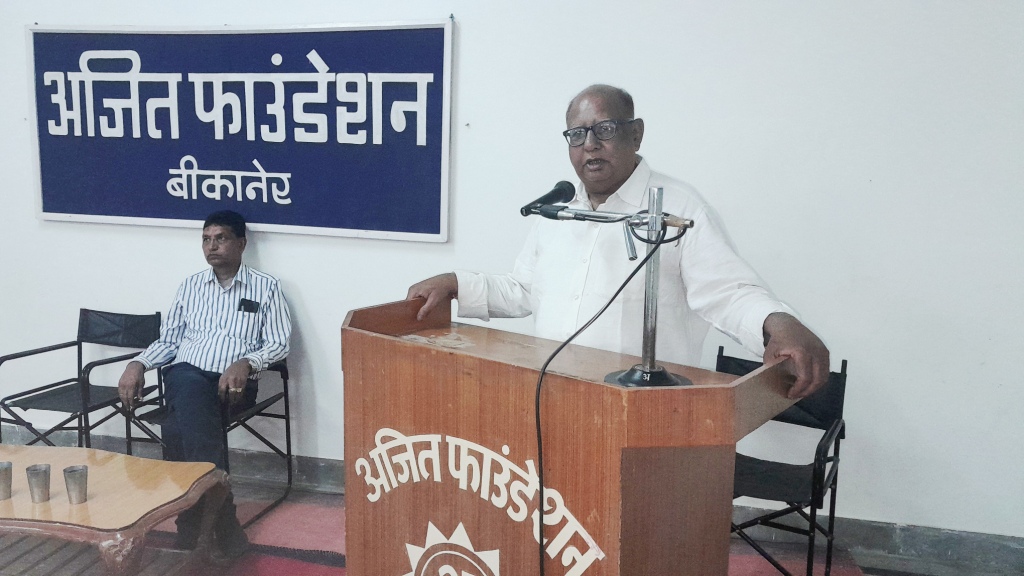
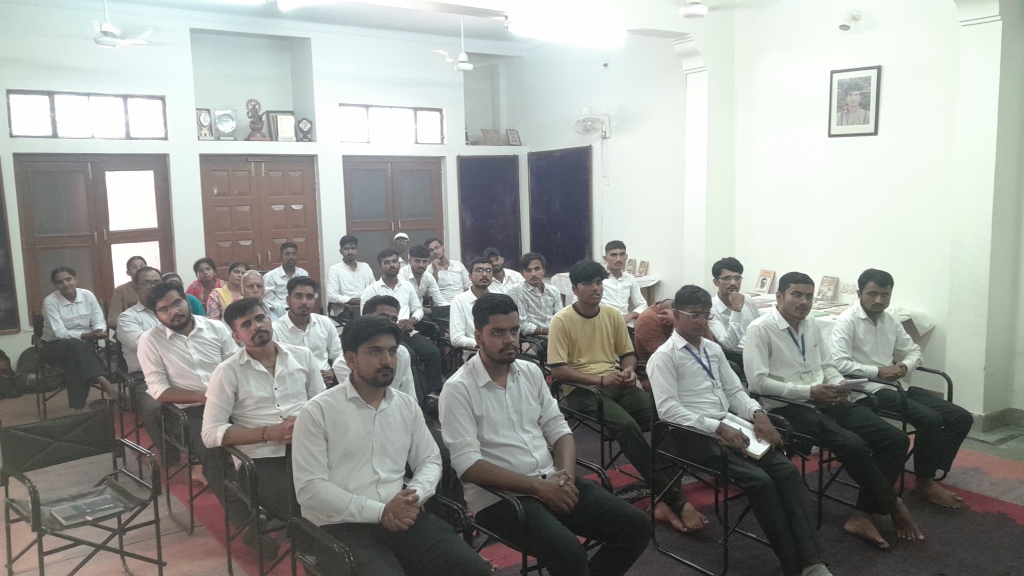
As part of its ongoing dialogue series, the Ajit Foundation organized a discussion on “Lifelong Learning: National Education Policy 2020” on 19th September 2025.
In his presidential address, educationist Dr. Manmohan Singh Yadav said that education instills self-respect and that the foremost duty of every teacher is to impart moral values to their students. Citing examples from renowned international thinkers, he emphasized that teachers are those who bring out the hidden potential of their students and inspire them to move forward. Discussing the National Education Policy (NEP 2020), Dr. Yadav said that its success depends on collective effort and effective implementation.
The keynote speaker, educationist and writer Rajendra Joshi, explained that lifelong learning means continuously gaining knowledge throughout life and staying updated with changing times — whether in technology or other areas. He emphasized the importance of combining education with vocational skills to remain progressive in life. Joshi highlighted the value of comparative study in strengthening understanding across subjects and spoke about the interconnectedness of education, health, literacy, and language. He noted that a balanced relationship between humans and nature is essential for building a clean and harmonious society.
He also stressed the importance of digital literacy in the modern world and the need for mother-tongue-based education under the new policy. Concluding his remarks, he urged everyone to help educate those who are still illiterate so that the state and district can achieve full literacy.
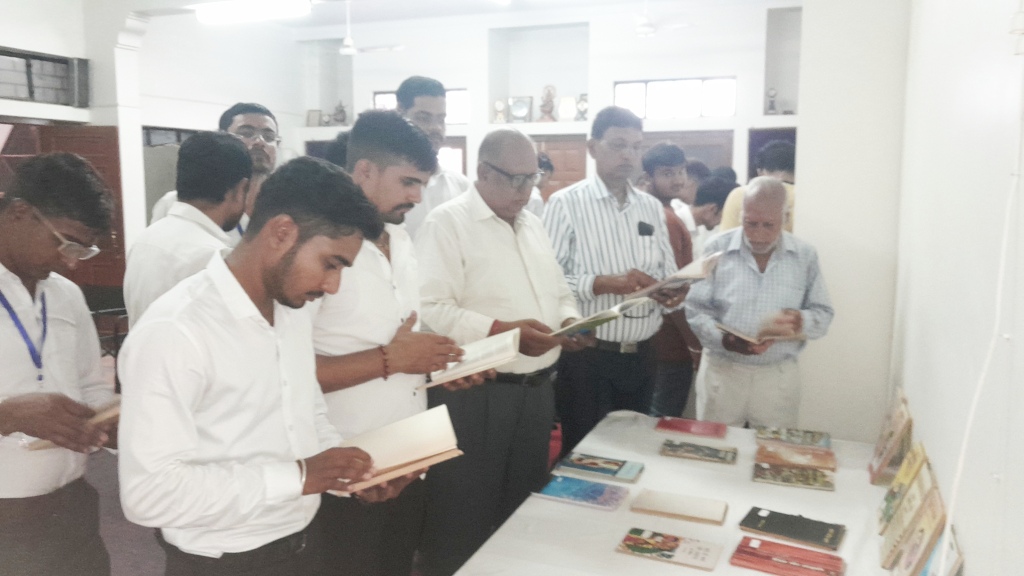
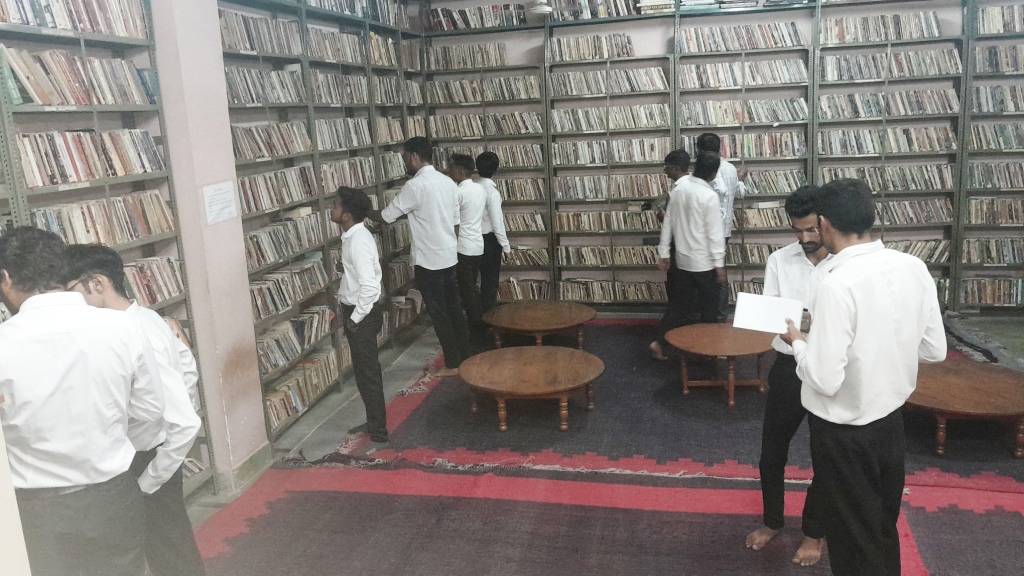
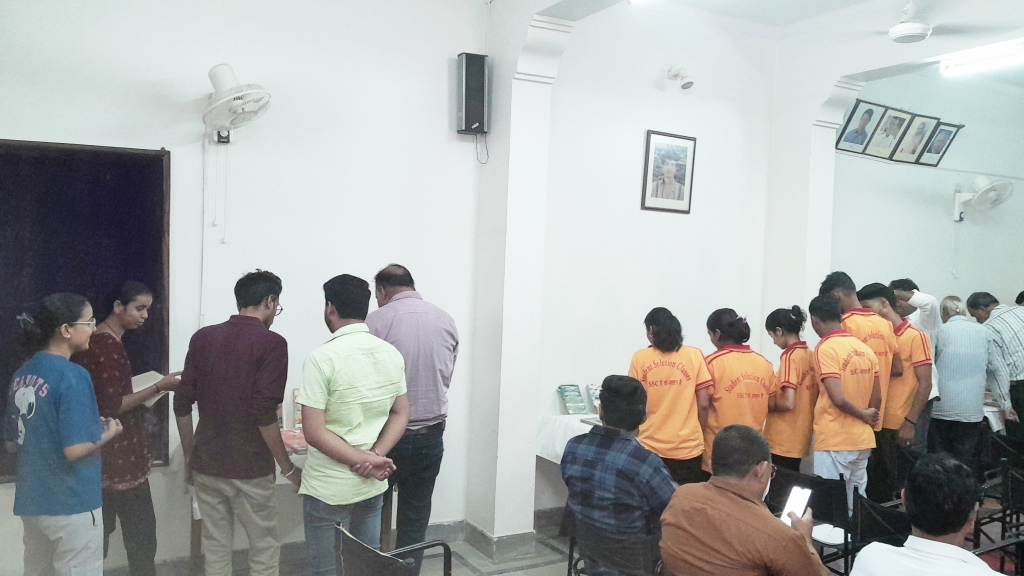
At the beginning of the program, Sanjay Shrimali, the Foundation’s coordinator, mentioned that since the discussion was focused on education policy, it was essential to include B.Ed. students, who represent future educators. Alongside the dialogue, a book exhibition on education was also organized, showcasing works by some of India’s leading educationists for participants to read and explore.
Joint Programme with Surabhi Sansthan 20 September 2025:
Seminar in Memory of Folk Poet Dhananjay Verma
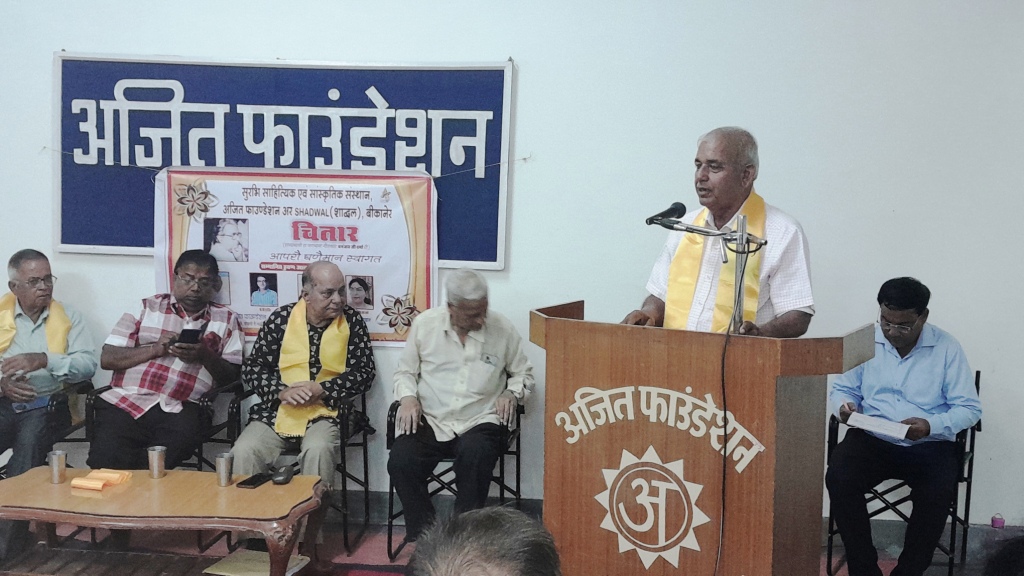
On 20th September 2025, the Ajit Foundation, in collaboration with Surabhi Sansthan, organized a special cultural programme titled “Chitar” at its auditorium to commemorate the legacy of folk poet Dhananjay Verma. The event featured readings of Verma’s timeless works by Shri Govind Joshi and reflections by chief guest Bulaki Sharma, who praised Verma’s portrayal of rural Rajasthan through his evocative poetry. Speakers Prithviraj Ratnu, Omprakash Saraswat, and Dr. Abhay Singh Tak also shared insights into his lasting literary influence. Four Rajasthani writers — Jankinarayan Shrimali, Ravi Purohit, Rajendra Swarnkar, and Manisha Arya Soni — were honoured for their contributions to regional literature. The evening served as a warm tribute to Dhananjay Verma’s creative spirit and his enduring impact on Rajasthani culture.
27 September 2025
Monthly Dialogue: The Relevance of History and Its Sources – Popular or Appropriate
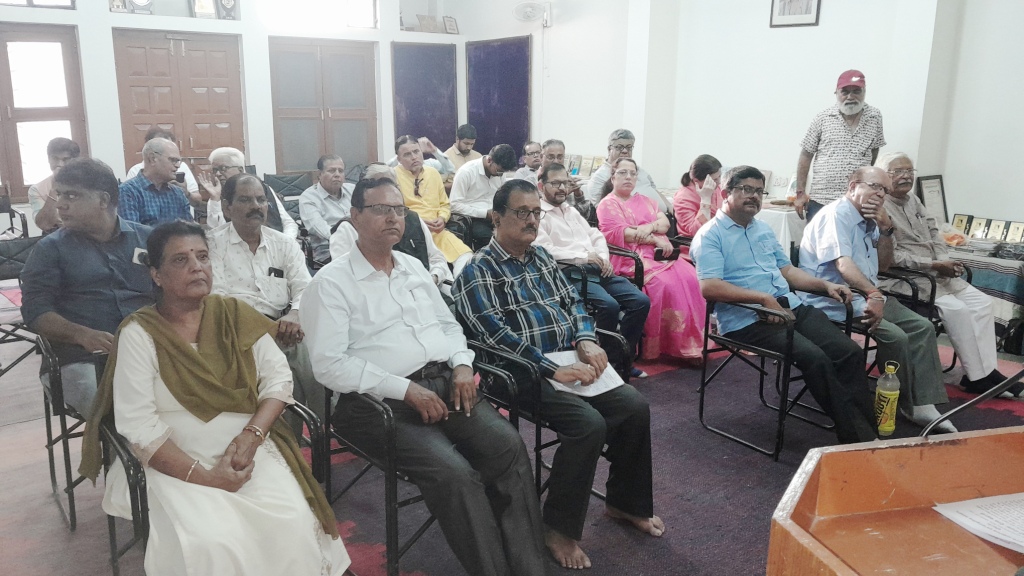
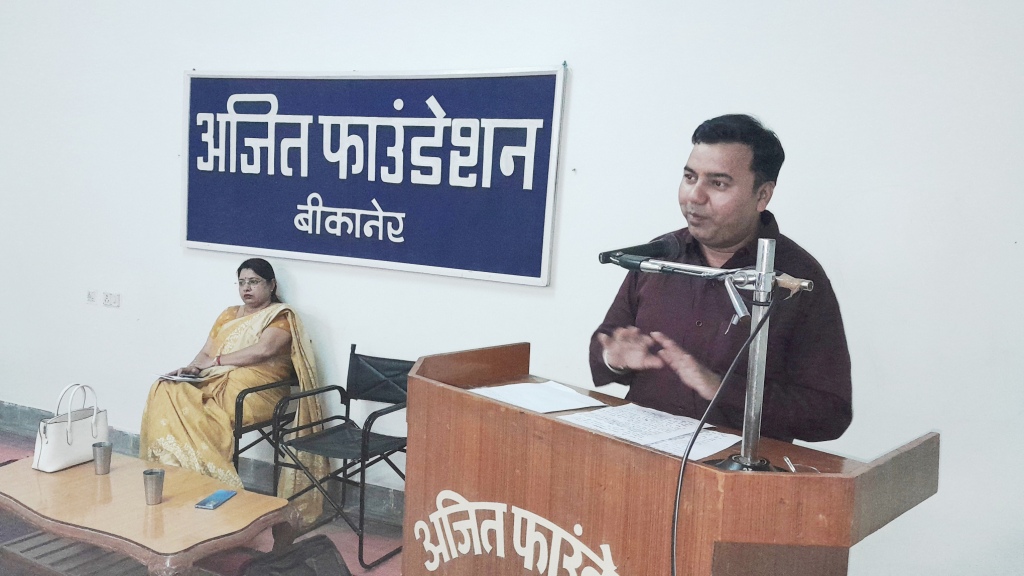
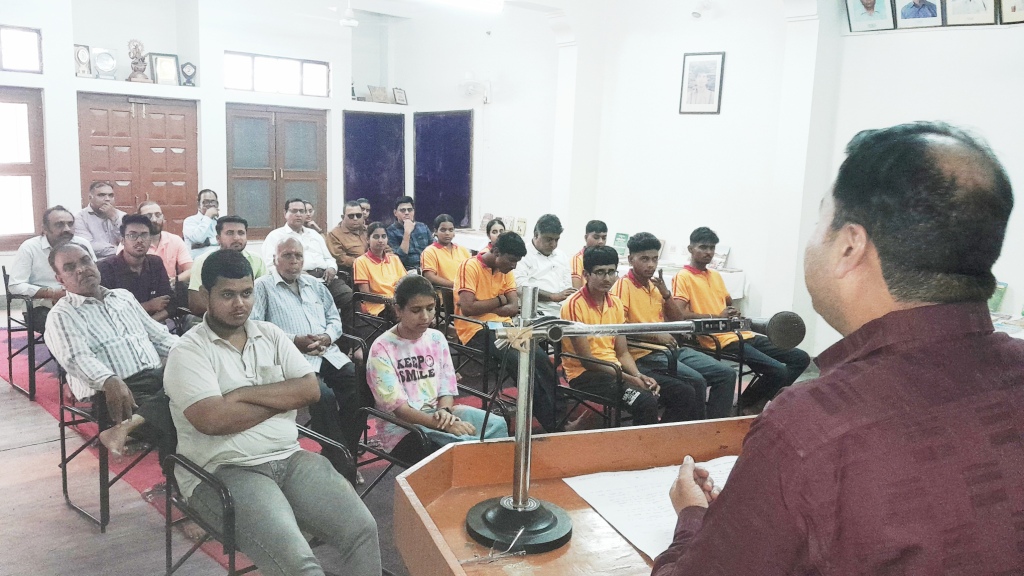
On 27th September 2025, as part of the Ajit Foundation’s monthly dialogue series, historian and senior research officer Dr. Nitin Goyal delivered a talk on “The Relevance of History and Its Sources: Popular or Appropriate.” He emphasized that the study of history nurtures strong social and moral values, describing history as the collective memory of society. According to Dr. Goyal, historical knowledge serves as genuine training for both education and political life, helping individuals and communities develop a clear sense of identity. He noted that understanding the political, economic, and cultural dimensions of major social processes is only possible through a deep study of history.
Dr. Goyal further stated that the study of history fosters respect for the past and a sense of national belonging. By understanding historical events and the contributions of great personalities, one can imbibe values such as integrity, perseverance, public welfare, and harmony. He cautioned that in the present age, where cinema and social media often shape public perceptions of history, it is essential to engage in source-based historical study before accepting such portrayals.
Presiding over the session, historian Dr. Sunita Swami remarked that history is not merely a chronological record of events but a valuable repository of insights into the past. It provides a meaningful understanding of the social and administrative life of earlier times. She highlighted that credible historical knowledge comes only through archaeological, archival, and oral sources, which preserve the authenticity and continuity of the historical narrative.
August 2025
15 August 2025: Monthly Dialogue: The Indian Constitution and Its Challenges
On 15th August, Ajit Foundation organized a dialogue on “The Indian Constitution and Its Challenges” to mark Independence Day.
Dr. Anant Kishore Joshi, Principal of Rampuria Law College, delivered the keynote address. He highlighted that while discussions about the Constitution are widespread, few people actually read or understand it deeply—most rely on social media or hearsay.
Dr. Joshi emphasized that learning about the Preamble and key constitutional principles should begin in schools and continue through higher education. He reminded participants that the Constitution is the supreme law of the land, supported by its three pillars — the legislature, judiciary, and executive — which safeguard citizens’ rights and freedoms.
He urged the youth to take an active interest in understanding the Constitution and to contribute meaningfully to the nation’s progress.
Hathai Programme – 24 August 2025
Under the “Hathai” series, Ajit Foundation organized a literary discussion on the eminent national poet Ramdhari Singh ‘Dinkar’ on 24th August 2025.
Young writer Imroz Nadeem, speaking about Dinkar’s celebrated poem Rashmirathi, described it as one of his finest long compositions and a milestone in Hindi literature.
Armaan Nadeem observed that in today’s time, serious literary criticism has become rare. Dinkar, however, was deeply engaged in critical writing—never for personal gain or out of self-interest. He fearlessly critiqued British rule before independence and continued to hold governments accountable even after independence.
Young writer Suresh Purohit mentioned that the then Prime Minister Indira Gandhi had honored Dinkar with the title of “Rashtrakavi” (National Poet). He added that during the India–China war, Dinkar wrote several powerful patriotic poems that remain relevant and inspiring today. Rashmirathi, based on the Mahabharata, beautifully explores the character of Karna and also reflects upon the injustices faced by Draupadi.
Ravi Purohit highlighted that Dinkar’s poetry in Veer Ras (heroic sentiment) stands out as among the best in Hindi literature and that he also depicted women’s pain and resilience with great sensitivity.
Anand Changani noted that Dinkar’s poetry is both profound and linguistically complex, capturing the essence of social struggles and emotional depth through his words.
Hathai Programme – 31 August 2025
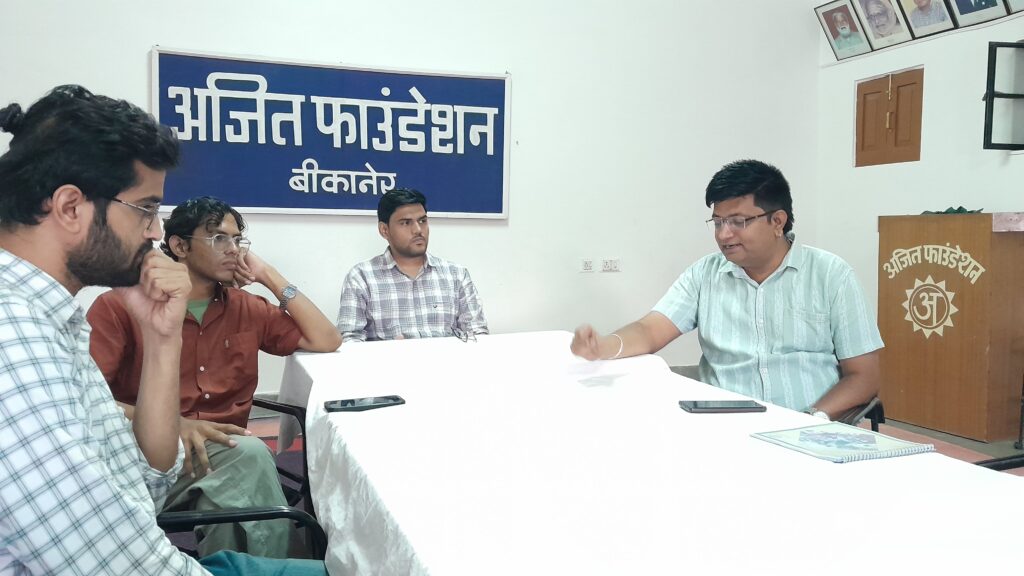
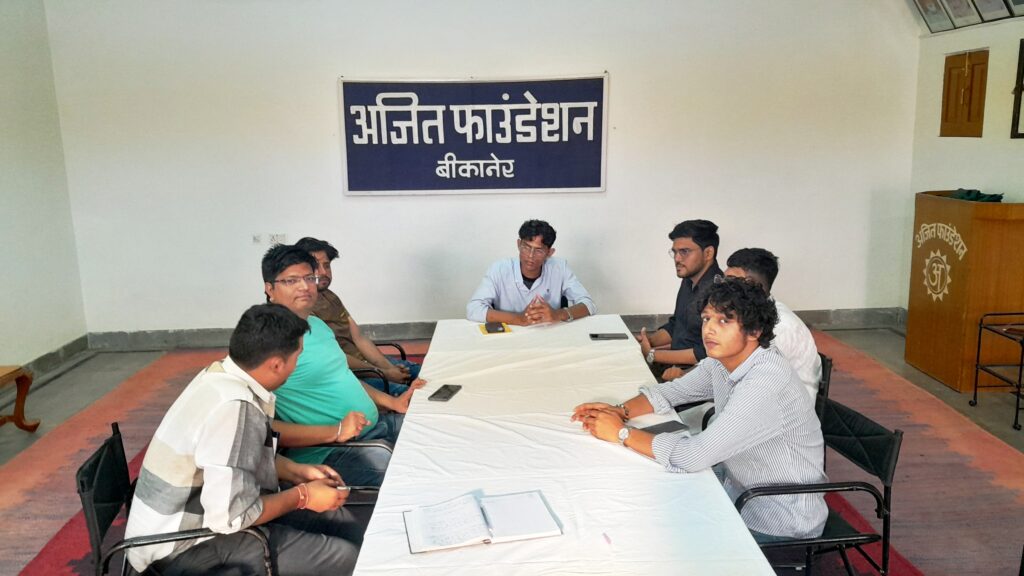
The Ajit Foundation organized a Hathai discussion on “Literary Contributions to Bikaner’s Culture” on 31st August 2025.
Armaan Nadeem spoke about the Urdu Ramayana written by Badshah Hussain Rana Saheb, which presents Tulsidas’s Ramayana in poetic form and beautifully captures all major episodes. He also noted that Bikaner’s Pata culture continues to attract visitors from India and abroad.
Suresh Purohit highlighted how Bikaner’s festivals are deeply linked to its cultural traditions and mentioned Pithal Pathal as a work that inspired youth during the freedom struggle.
Educationist Anand Purohit traced the roots of Bikaner’s literature to early works like Rao Jaitasi Ro Chand and Veli Kisan Rukmani, calling for efforts to revive them through music and rhythm.
Imroz Nadeem emphasized the royal family’s contribution to literature and music, urged youth to support recognition of the Rajasthani language, and noted that Maharaja Ganga Singh Ji had awarded a gold medal to Badshah Hussain Rana Saheb for his Urdu Ramayana.
Tejesh Joshi underlined the strong link between literature and music in Bikaner, while Azeem Hussain concluded that communal harmony remains the foundation of the city’s cultural identity.
July 2025
19 July: Exhibition on Fossils and Books
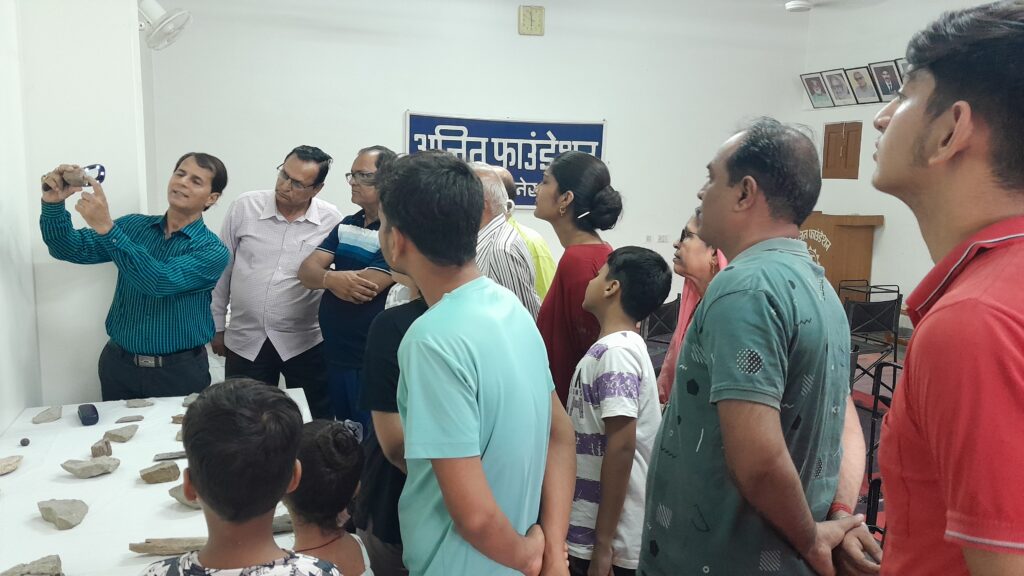
On July 19, an exciting exhibition on fossils and books was held, showcasing rare glimpses into Earth’s ancient past. The event featured newly acquired books on biology and the age of dinosaurs, alongside a unique fossil collection curated by Dr. Rakesh Harsh. Visitors saw actual fossils from the Jurassic period (about 150–200 million years ago) and the Tertiary period (about 70–90 million years ago). Jurassic fossils, collected from Jharkhand, included ancient plant types like Gymnosperms (plants with exposed seeds, like conifers) and Pteridophytes (ferns and their relatives). Tertiary fossils from Bikaner included Angiosperms, or flowering plants, preserved as fossilized wood. For many students and visitors, it was their first encounter with real evidence of prehistoric life—turning pages of history into a hands-on experience of science and wonder.
July 20 – Fossils: Stories from a Bygone Era
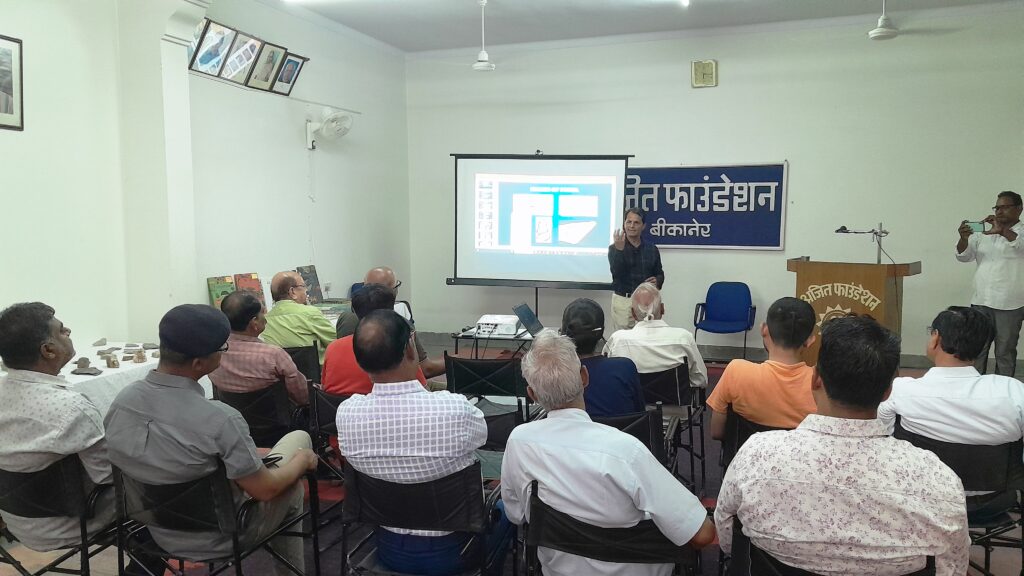
In a fascinating dialogue held on July 20, biologist Prof. Rakesh Harsh spoke on the theme “Fossils: Stories from a Bygone Era,” explaining how fossils—remains or impressions of ancient organisms—help scientists trace the evolution of life and determine the age of rocks. He described how most fossils come from the hard parts of plants and animals, while rare full-body fossils can be preserved in glaciers. Millions of years ago, plants and creatures buried under soil and protected from air and water gradually turned into fossils. Prof. Harsh shared that he has collected thousands of fossils from Bikaner, including 32 of previously unknown species. Some fossils are visible to the naked eye, while others require a microscope. He also discussed trace fossils like footprints and impressions, which reveal the external structure of extinct organisms. His talk covered fossil discoveries from both the Jurassic and Tertiary periods, offering a rich glimpse into Earth’s ancient biological history.
🗓️ July 27: Discussion on Stories of Munshi Premchand
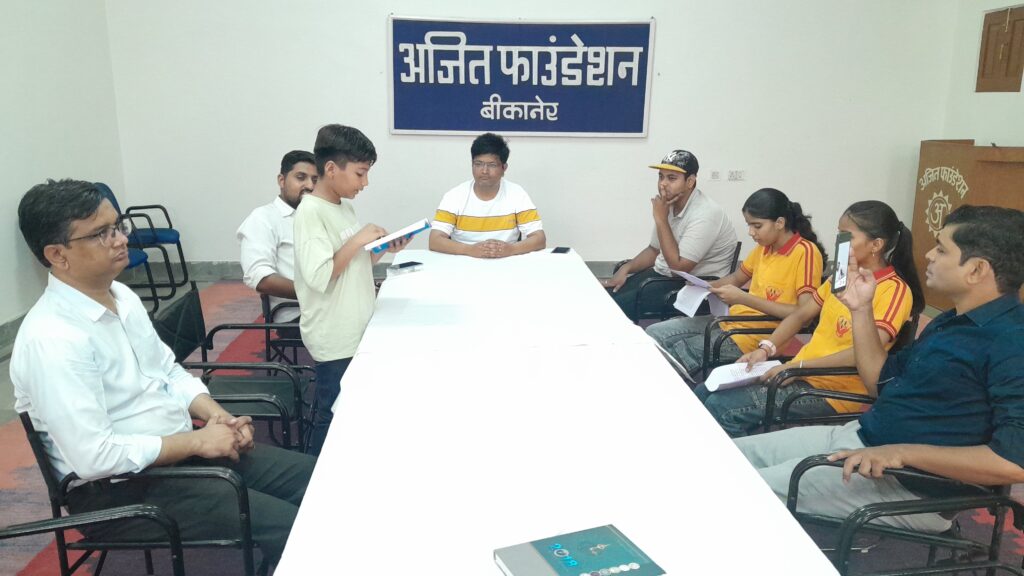
On July 27, Ajit Foundation’s “Hathi” initiative—an effort to encourage young readers in Bikaner to engage with Hindi literature—organized a thoughtful session dedicated to the stories of Munshi Premchand. Anand Purohit classified Premchand’s storytelling into three phases: idealism, a blend of idealism and realism, and pure realism, noting how the freedom movement influenced his themes of patriotism. Premkumar Meghwal spoke on Premchand’s ability to bring the social realities of his time to life, while Suresh Purohit highlighted the strong ethical tone and progressive portrayal of women in his work. Young members of the group shared insights on key stories: Prateek reflected on the universal appeal of “Eidgah,” Arpita Swami appreciated the nuanced take on justice and corruption in “Namak ka Daroga,” and Tanisha Suthar analyzed the social critique and gender themes in “Kafan.” A special aspect of the event was the full participation of youth under 30, including two teenage girls who read excerpts and shared their interpretations—making it an engaging and inspiring celebration of Hindi literature.
June 2025
Chahal-Pahal Inspires a Teacher in Kolkata
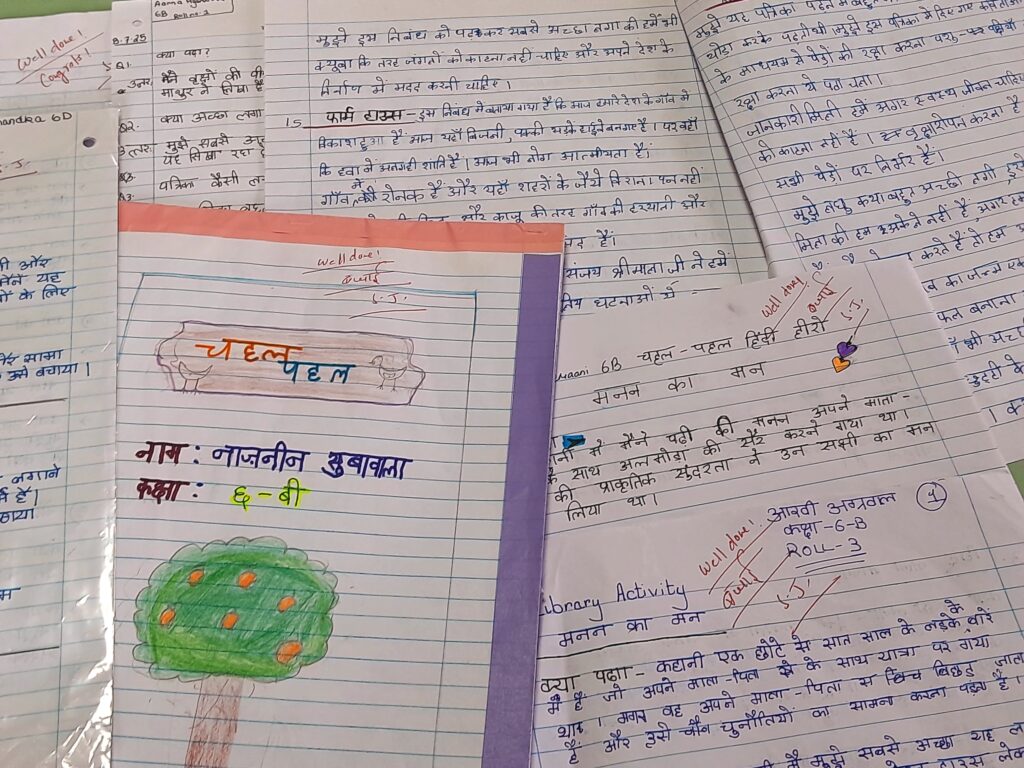
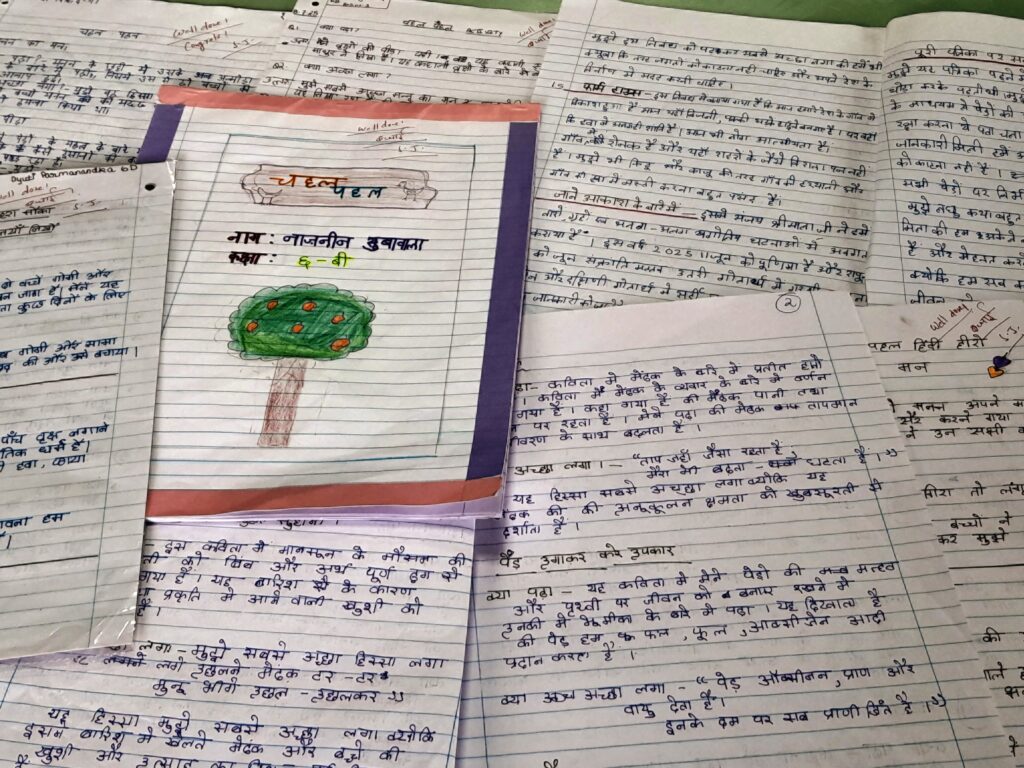
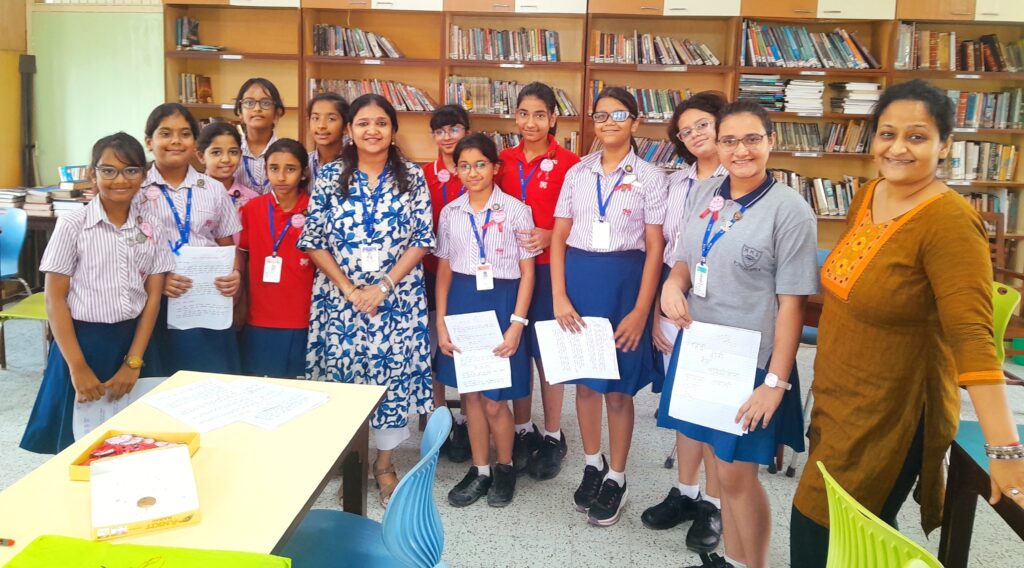
In June 2025, Chahal-Pahal, the Foundation’s online monthly children’s magazine, inspired a creative initiative by Sharmila Jalan, a schoolteacher from Kolkata, who shared online issues of the magazine with her students during the summer vacation and encouraged them to read and respond creatively. Fifteen girls participated and submitted their writings, and two will be honored with the “Hindi Hero” badge. The school appreciated this effort to promote Hindi among students, and a short report on the activity has been featured in Chahal-Pahal. It is encouraging to see the magazine’s influence reaching beyond Rajasthan to Bengal.
Documentary Films for Children
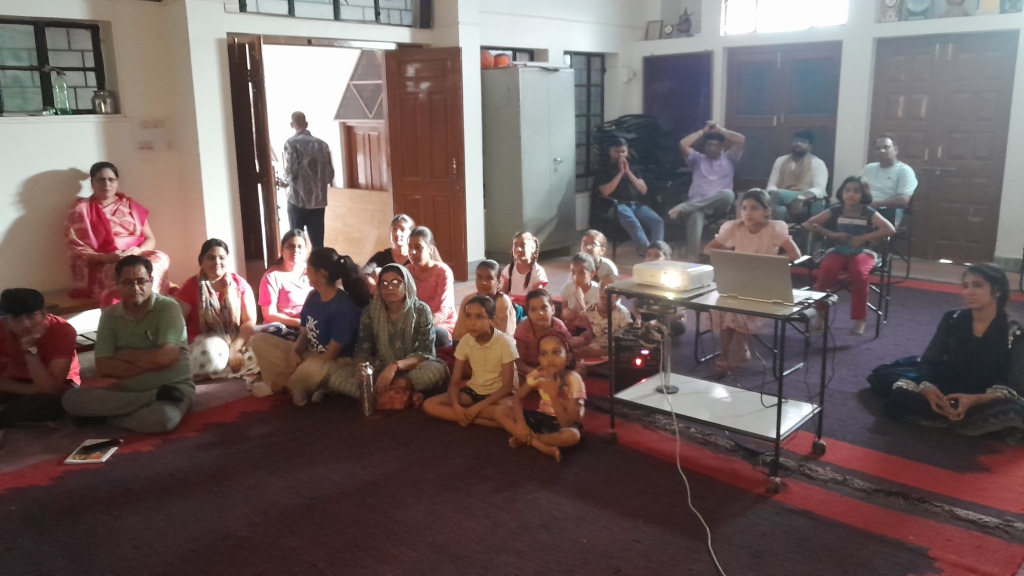
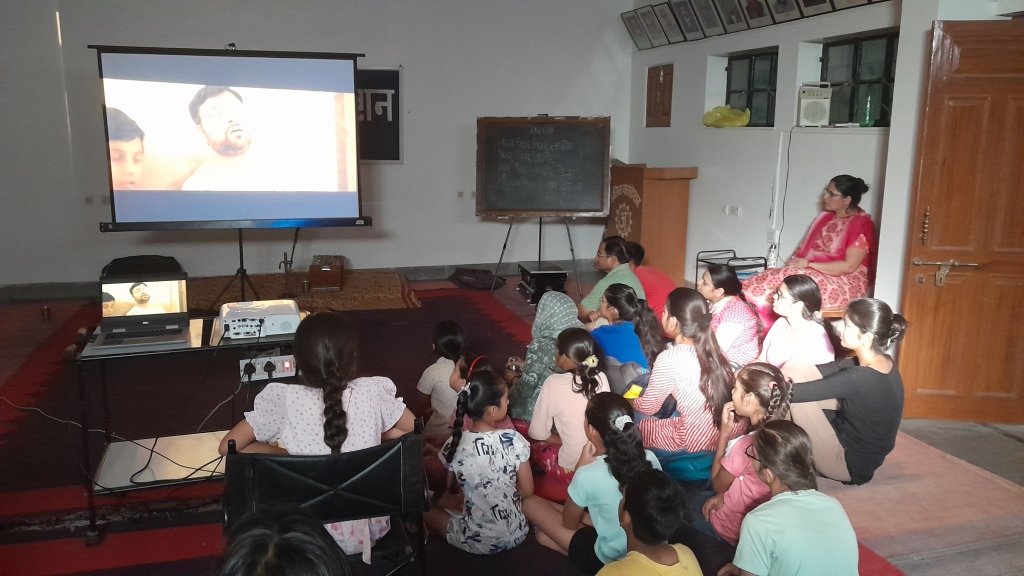
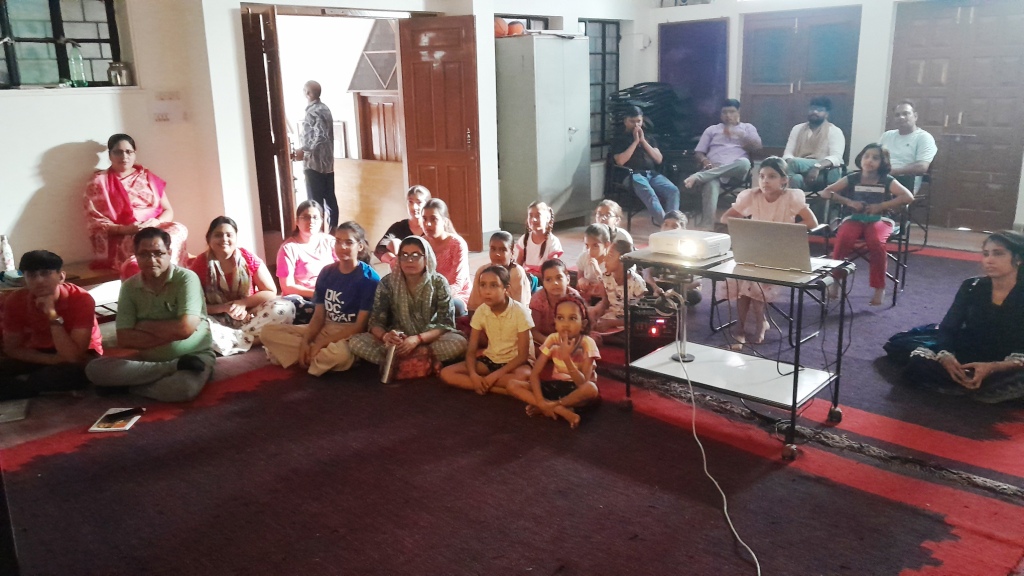
As part of the Foundation’s summer program, we screened three documentary films for children this month. The first, The Sound of Music, is based on a child who cannot hear but has mastered playing over a thousand musical instruments. The second film, P.T.M., focused on the reactions of parents during parent-teacher meetings at school. The third, Main Abdul Kalam Hoon, was a documentary highlighting the life and inspiration of Dr. A.P.J. Abdul Kalam. All three films were both meaningful and engaging. In addition to children, several teenagers and young adults also participated in these screenings.
Music Workshop
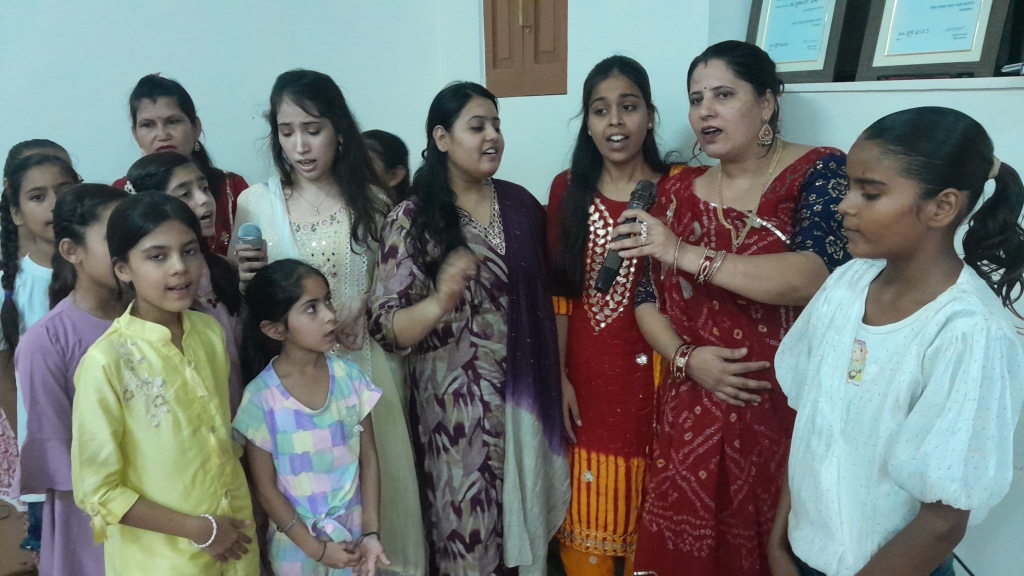
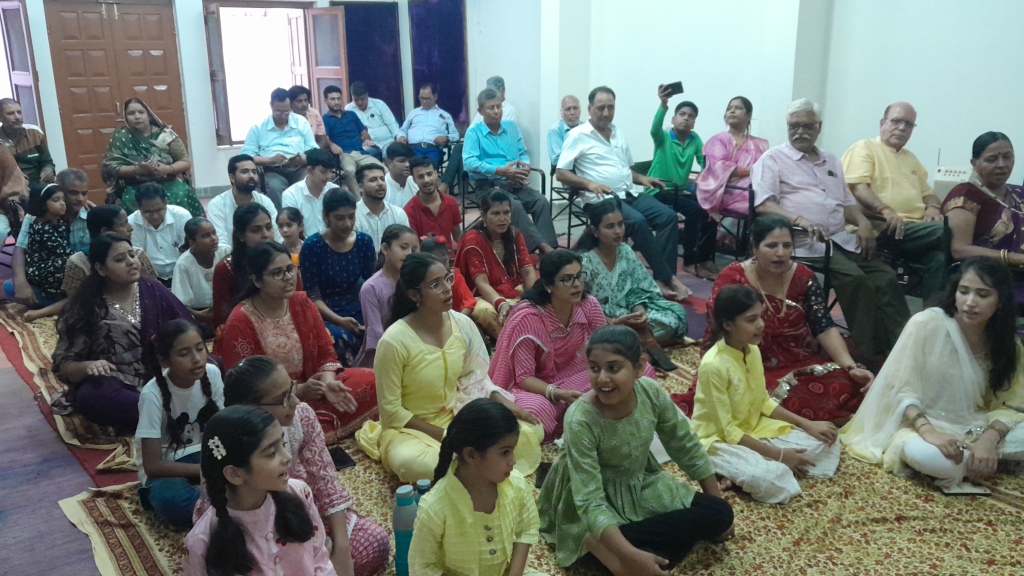
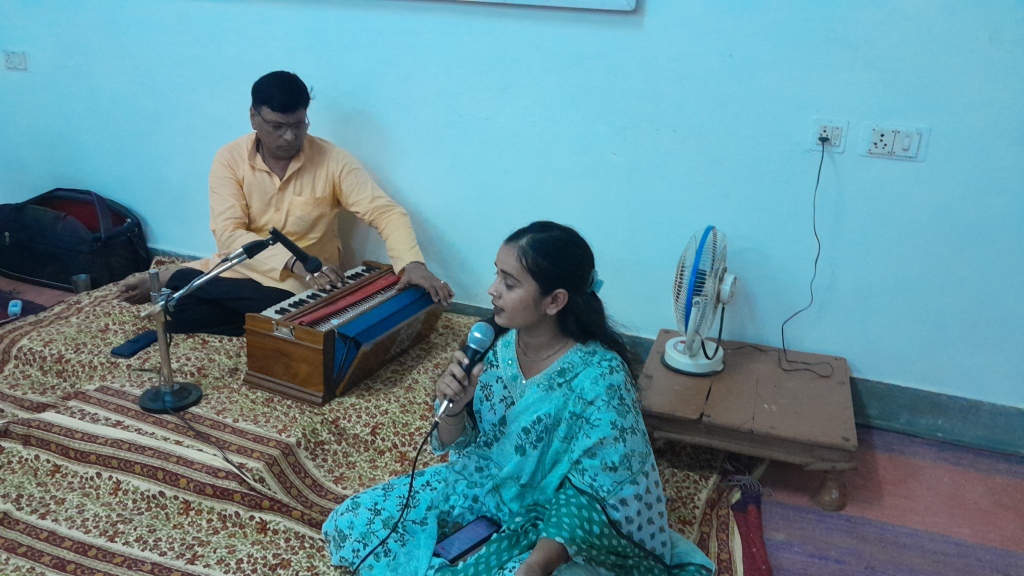
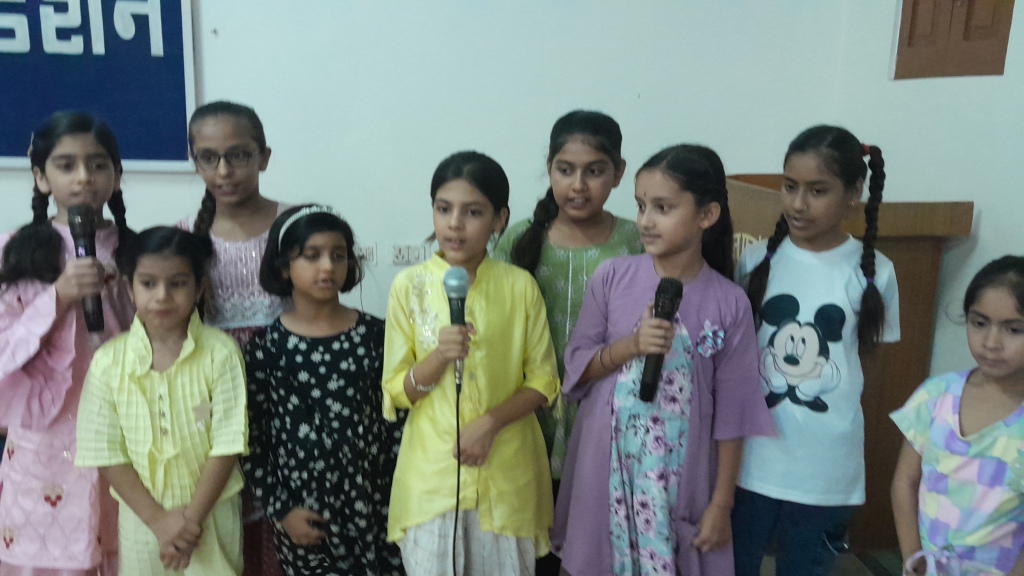
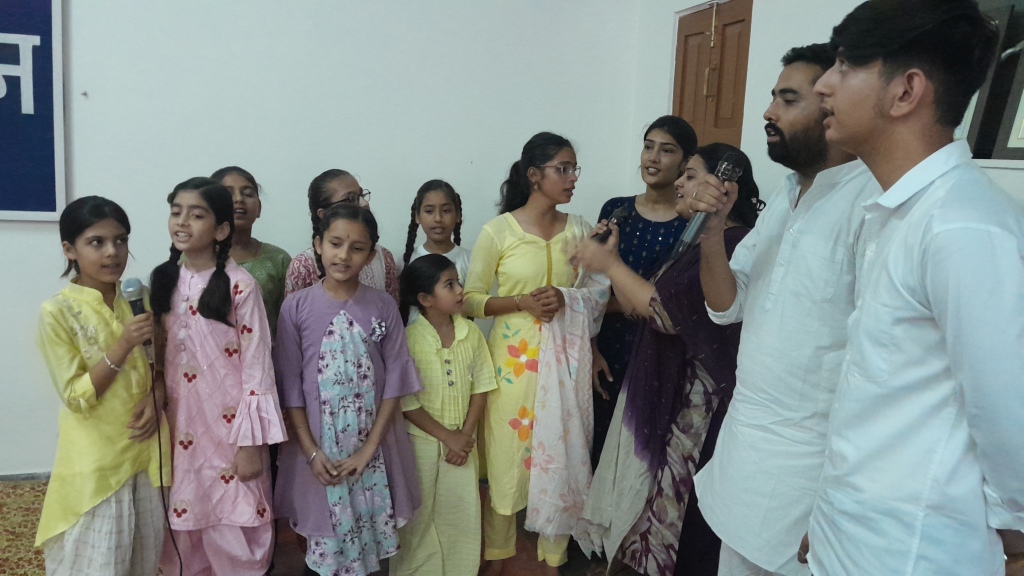
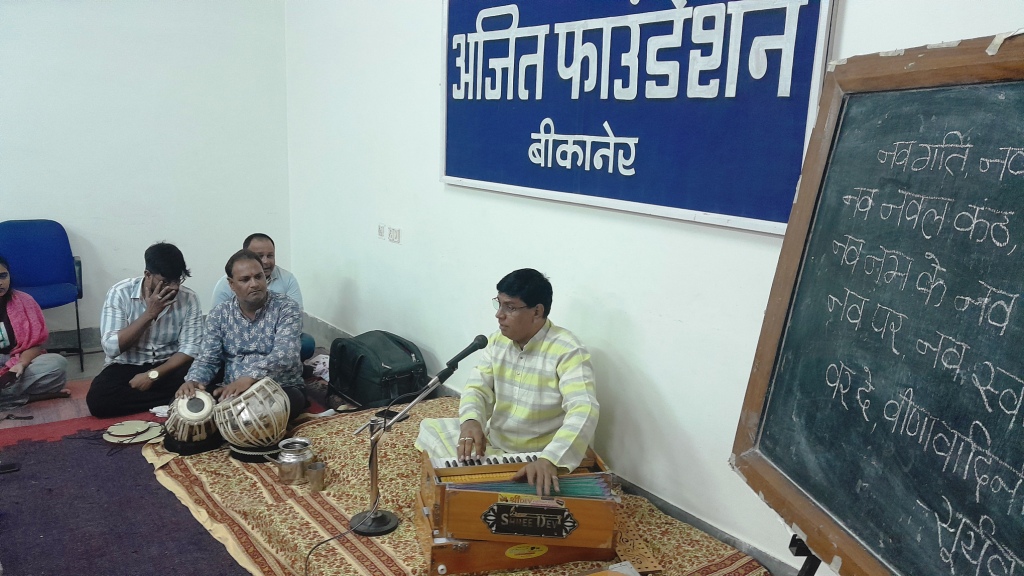
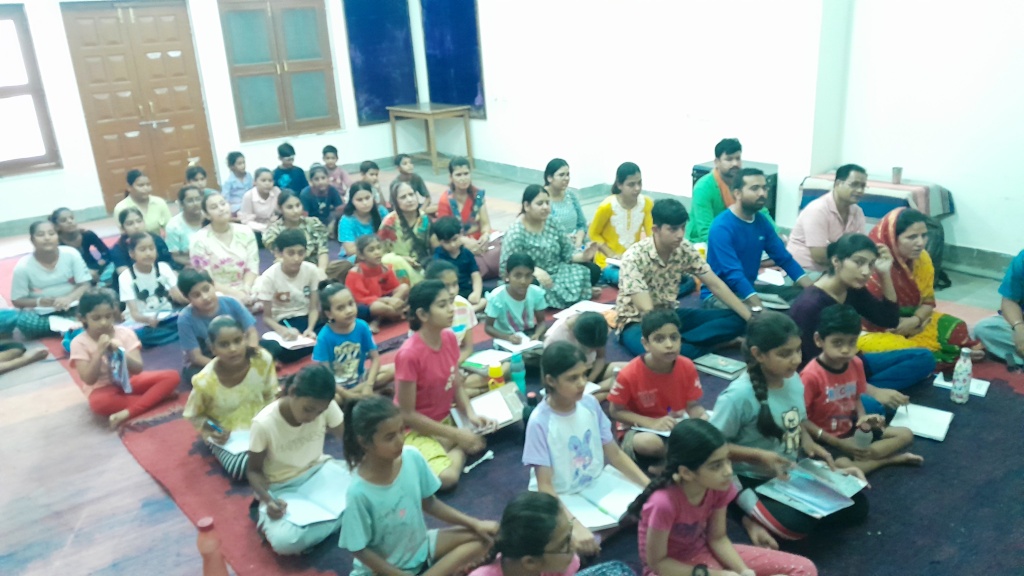
As part of the Foundation’s summer activities, a 25-day music workshop was organized in June and proved to be a memorable and enriching experience for all participants, ranging in age from 10 to 50 years. Every day, 30 to 35 participants gathered in the Foundation’s auditorium to engage in satsang, Rajasthani folk songs, Kabir vani, ghazals, and Meera bhajans, with daily riyaaz and new learning experiences. The workshop was led by Pandit Pukhraj Sharma, an experienced and dedicated music teacher, who not only taught music but also shared valuable insights into the professional possibilities within the field. He explained the therapeutic and psychological benefits of music, as well as its applications in healthcare. The workshop concluded with a vibrant “Sangeet Sandhya,” where all participants presented solo and group performances that left the audience deeply impressed. As a result, several participants expressed a desire to pursue music further and will continue learning under Pt. Sharma. The event also helped form a dedicated team for future music programs at the Foundation, and Pt. Sharma has offered to hold weekly music classes going forward.
May 2025
Online Dialogue on Artificial Intelligence
📅 Date: May 11, 2025
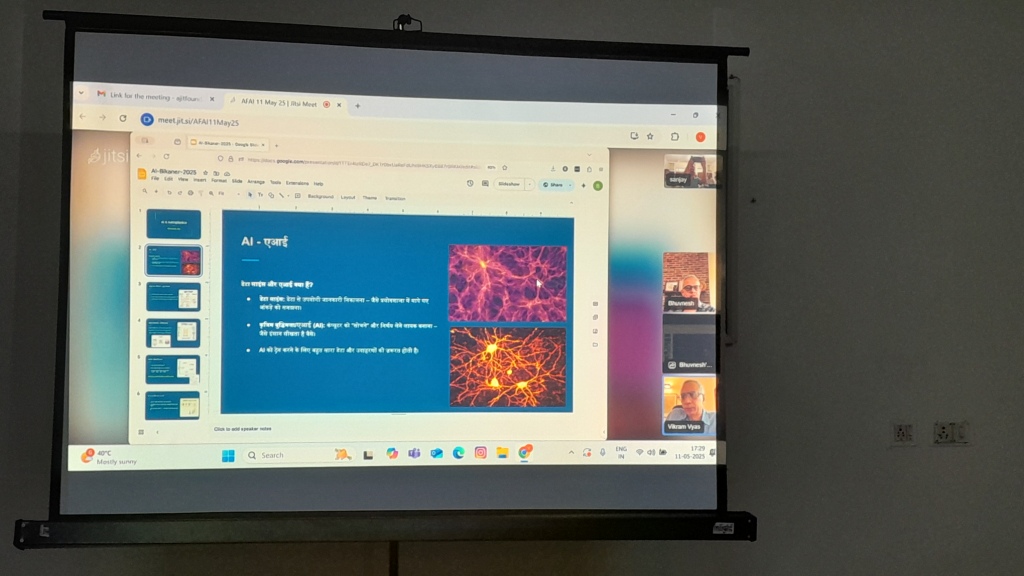
👤 Speaker: Prof. Bhuvnesh Jain is the Annenberg Professor of Natural Sciences at the University of Pennsylvania, where he co-directs the Data Driven Discovery Initiative and the Center for Particle Cosmology.
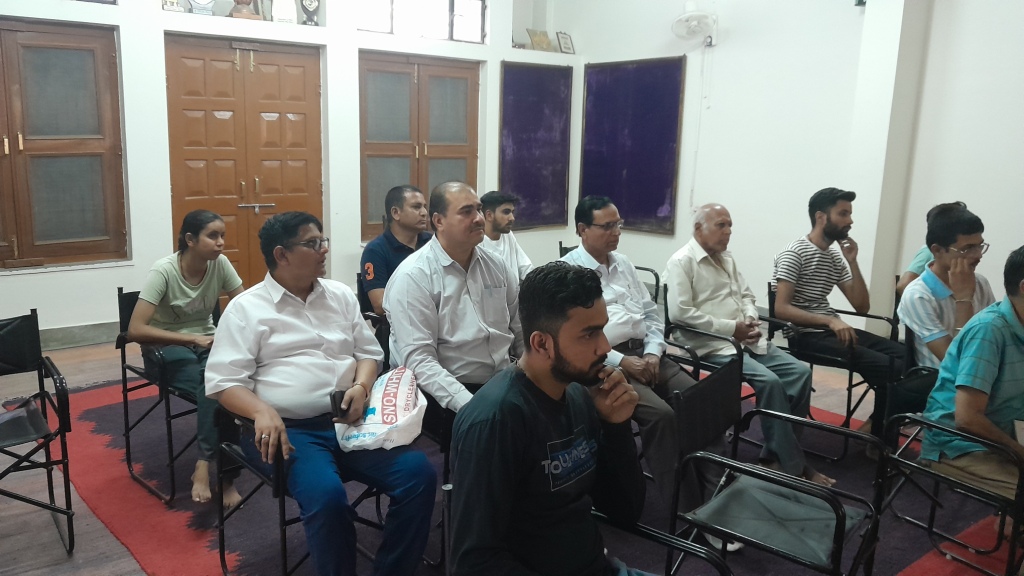
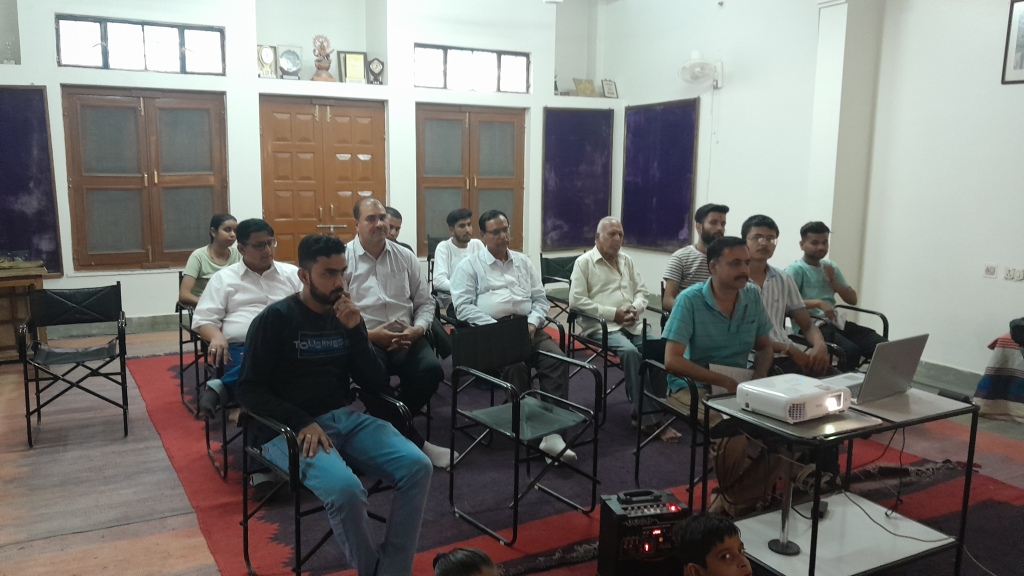
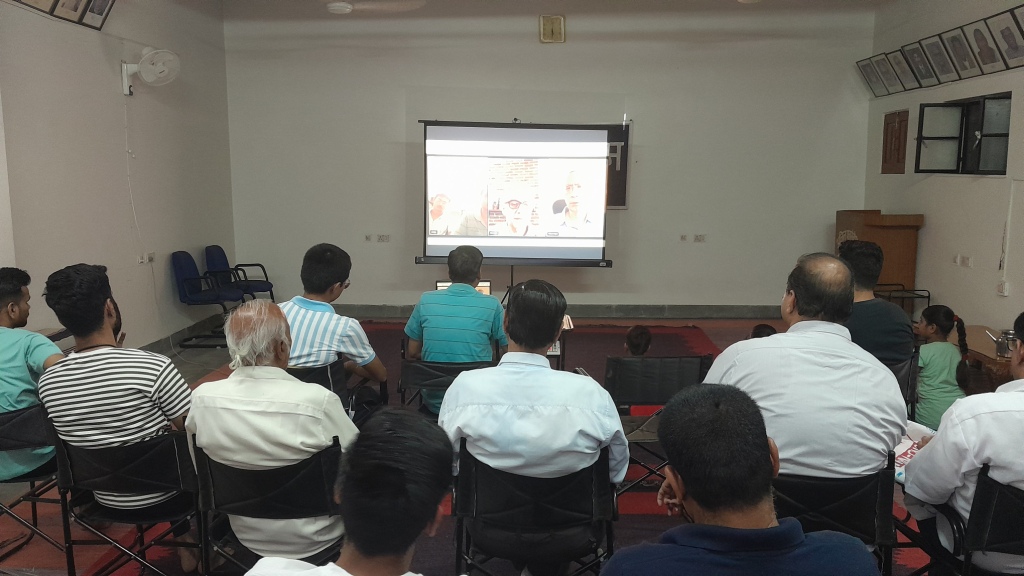
In a well-received online session, Prof. Jain introduced participants to the fascinating world of Artificial Intelligence (AI)using simple language and relatable examples. He explained how AI works, how it processes visual and textual information, and how it responds to human queries.
🪑 Launch of “Hathai” – Informal Talk Series
📅 Date: May 25, 2025
🎯 Theme: Stories of Vijaydan Detha
Ajit Foundation began a new monthly literary program called “Hathai”, an open conversation circle for cultural and thematic discussions.
Highlights from the first Hathai:
- “Asha Amardhan” presented with context by the host
- Vaibhav discussed “Beta Kiska” and its take on social complexities
- Anand Kumar Changani spoke on “Puttiya Chacha”, emphasizing its psychological layers
“Vijaydan Detha’s stories are timeless cultural treasures.” – Kamal Ranga
💬 Veteran writer Kamal Ranga shared insights into Detha’s contribution to Rajasthani folk literature, highlighting “Bata Ri Phulwari”.
📖 Bonus Resource:
“Boruda Diary” by Malchand Tiwari – a recommended read on Detha’s life and simplicity.
👥 Youth participants expressed interest in contributing to future Hathai discussions.
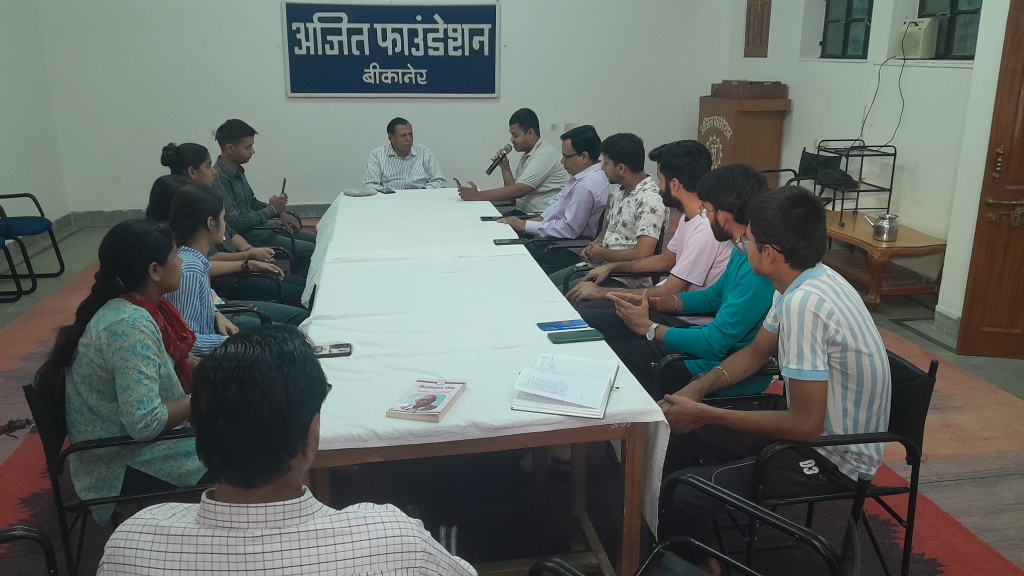
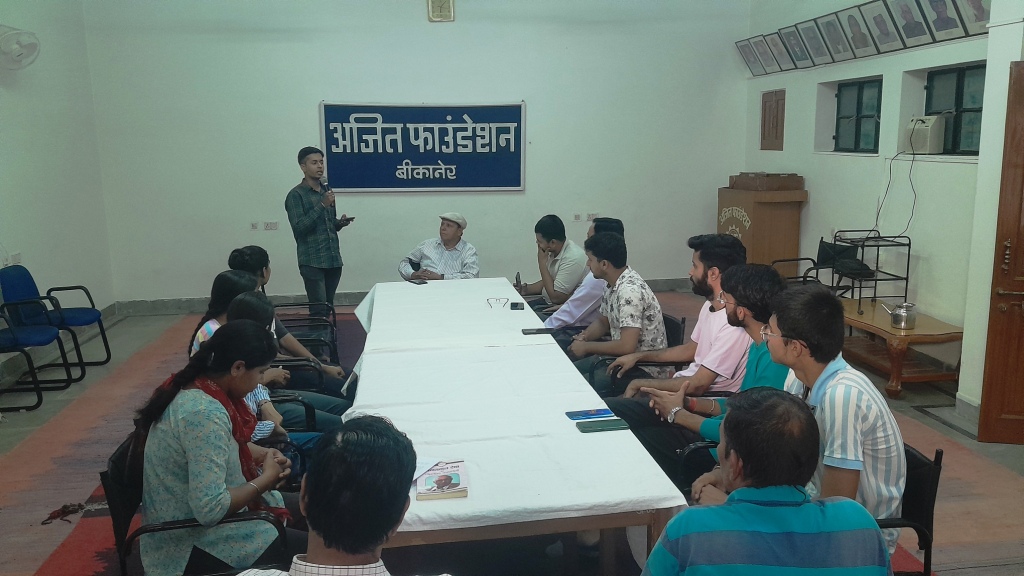
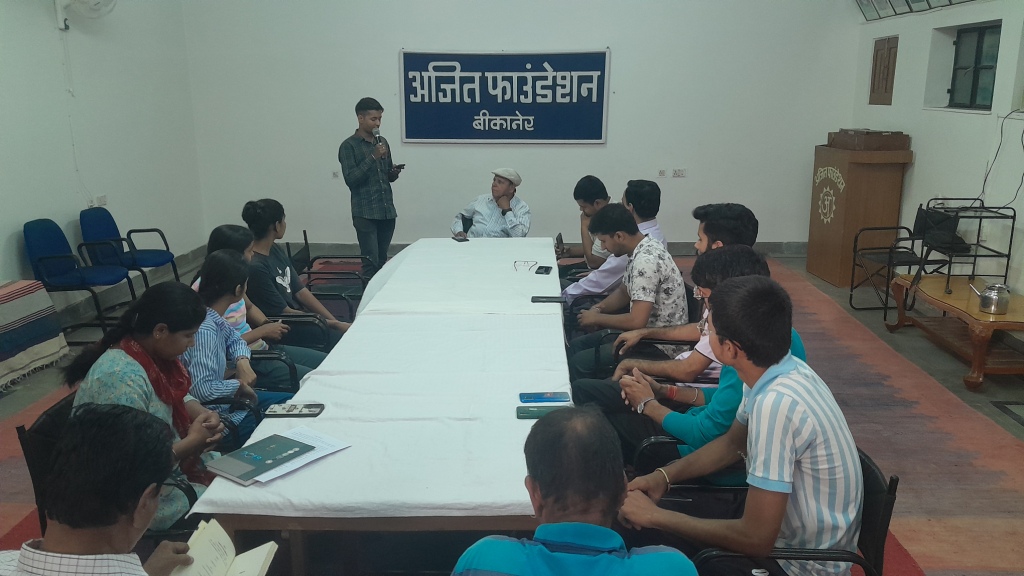
🎵 Summer Music Camp Begins
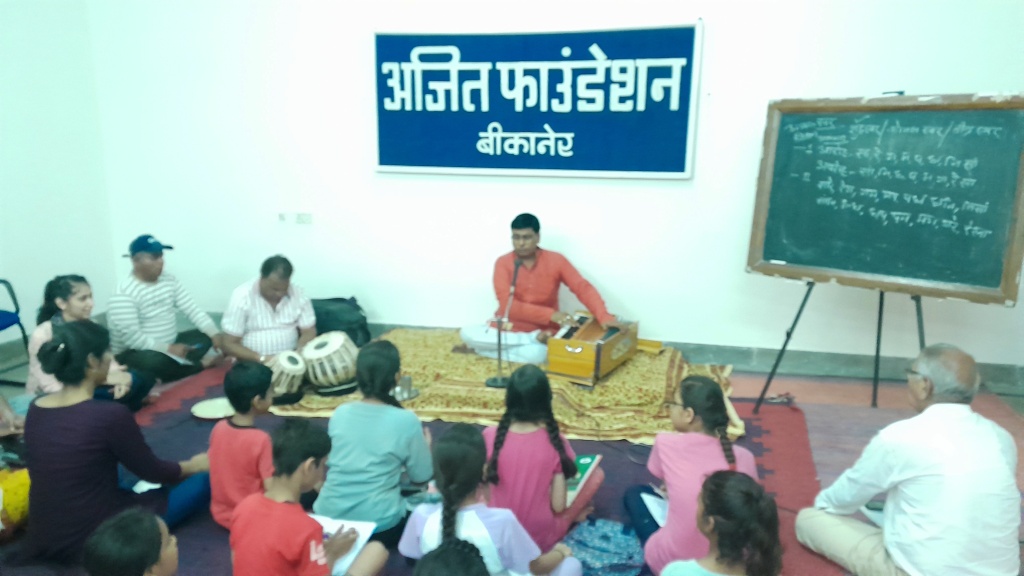
📅 Date: May 26, 2025 – June 26, 2025
🎶 Lead Instructor: Pt. Pukhraj Sharma
🧑🤝🧑 Participants: Ages 10–50 (42 enrolled)
The Ajit Foundation’s annual summer music camp kicked off with enthusiasm, featuring:
- Group-wise training: Children, Teens, Youth
- Theory and practical sessions
- Daily sargam practice
- Saraswati Vandana, harmonium, and tabla sessions
🎼 Tabla sessions led by: Shri Naval Shrimal
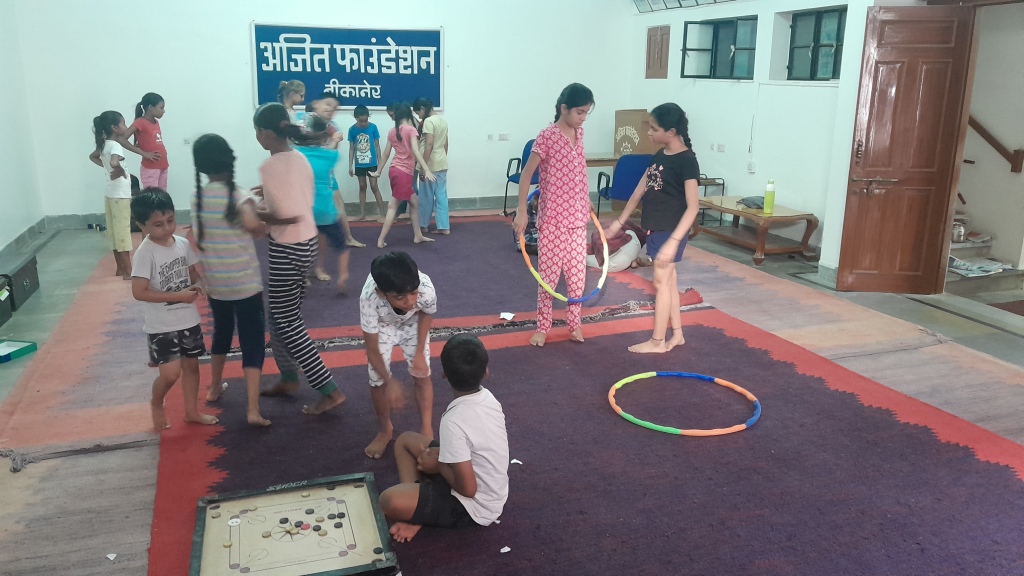
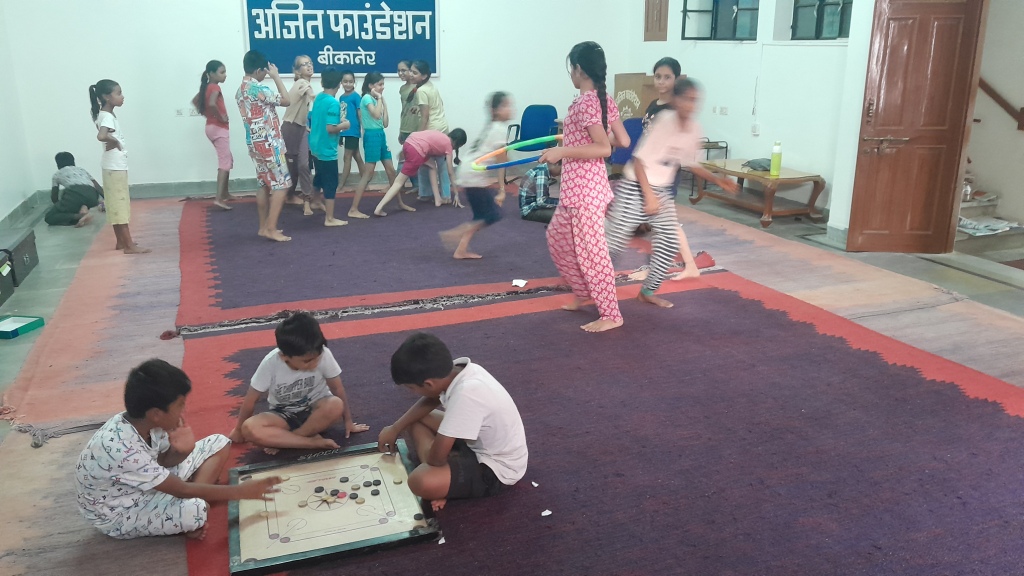
🎨 Daily Evening Activities for Children
🕓 Time: Every day, 4:00 PM onwards
📍 Venue: Foundation Building
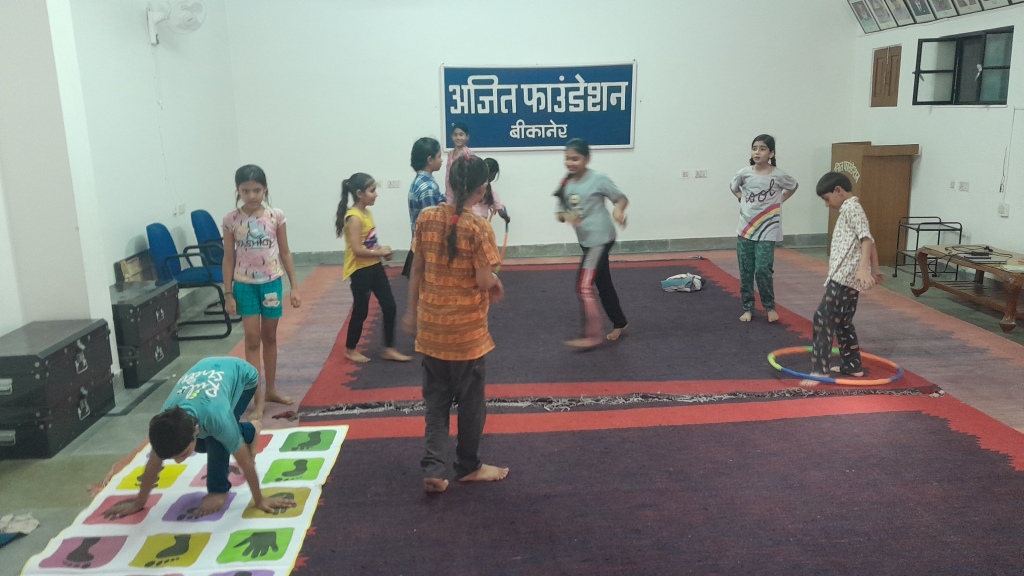
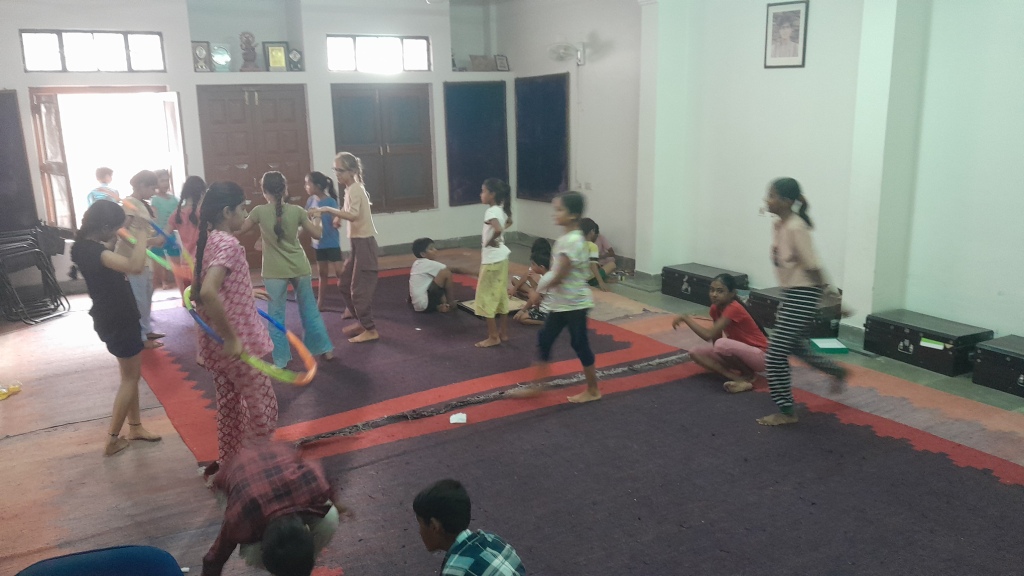
Creative play sessions for children are being held regularly, including:
- Toy-based learning
- Painting and craft activities
These sessions encourage self-expression and joy in a safe, nurturing environment.
April 2025
The Essence and Meanings of Travelling: The Annual Ajit Foundation Dialog by Prof. Shekhar Pathak
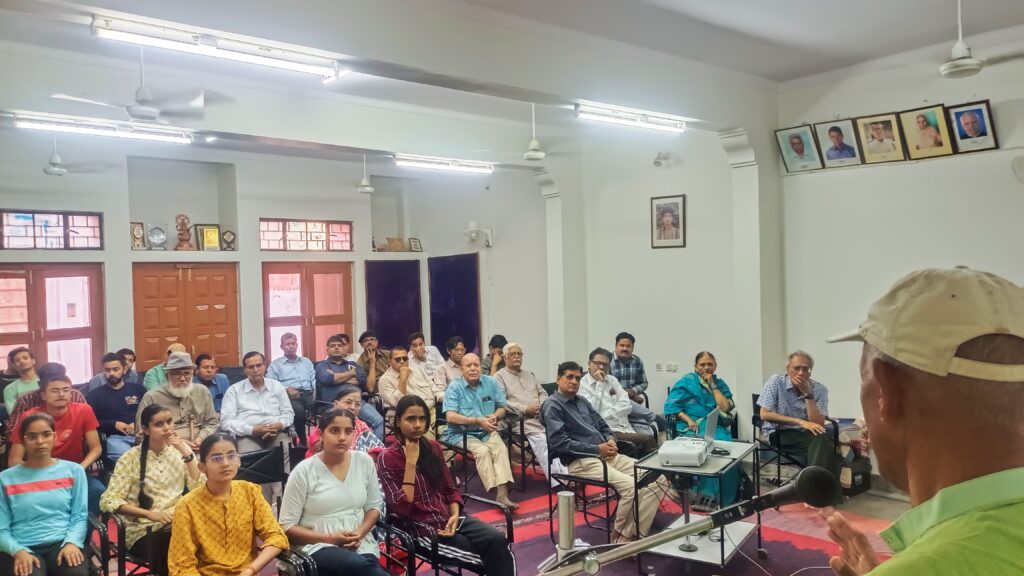
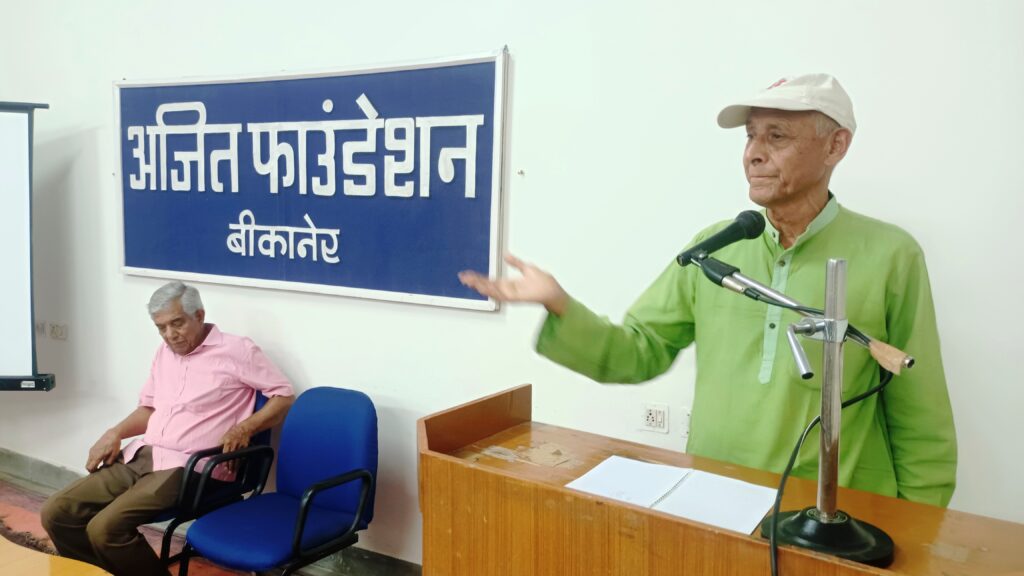
Dr. Shekhar Pathak, historian and founder of ‘Pahar’ organization, delivered a talk on “The Essence and Meanings of Travelling” at Ajit Foundation, Bikaner on April 12, 2025. He discussed how journeys contribute to personal and social development, with special focus on the Himalayan region. Dr. Pathak highlighted the unique Askot-Arakot Decadal Expeditions conducted since 1974, which have systematically documented environmental, cultural, and socio-economic changes across Uttarakhand over five decades. These walks, occurring every ten years, provide a rare longitudinal study of Himalayan transformation unavailable through any other research method. The session ended with participants discussing the value of such consistent documentation in understanding mountain communities and ecosystems
March 2025
Trilingual Poetry Reading and Poetic Journeys | March 9, 2025
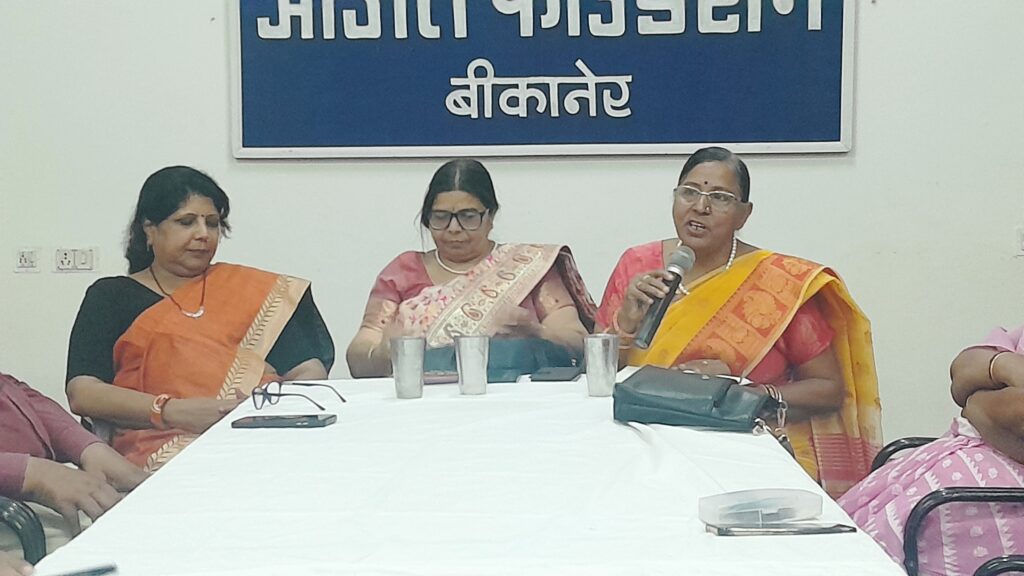
A vibrant literary evening was organized at the Ajit Foundation auditorium, celebrating poetic expression in Hindi, Rajasthani, and Urdu. The event featured accomplished women poets who shared both their verses and the stories behind their poetic journeys. Representing Hindi, Dr. Renuka Vyas ‘Neelam’ presented her recent poem “Nahin Hain Agyeya”, paying tribute to the literary giant Agyeya, followed by the environmentally-themed “Katta Hai Jab Bhi Hara Ped”, and the powerful long poem “Gandhari”, centered on the inner dilemmas of the Mahabharata’s Gandhari. In the Urdu segment, Sharada Bhardwaj opened with her nazm “Khuda Har Chehre Par Masoomiyat…”, reflecting on communal harmony and human innocence, and presented an Urdu Saraswati Vandana, showcasing her creative innovation in spiritual poetry. Dr. Krishna Acharya, reciting in Rajasthani, mesmerized the audience with “Mata Mhari Surast Hai, Maand Maandna Aakhar Jholi Bhar De”, and her touching poem on daughters “Kaalje Ri Kor Betiyan”. Her Holi-inspired song “Preet Ra Parinda Gaasi Preet Ra Geetalda”beautifully captured the mood of the season and nature’s joyful rhythms. The event was a celebration of linguistic diversity, poetic expression, and the creative voice of women in literature.
February 2025
Children’s Literature: Book Exhibition and Dialogue (February 15-16, 2025)
Children’s Literature: Book Exhibition and Dialogue (February 15-16, 2025)
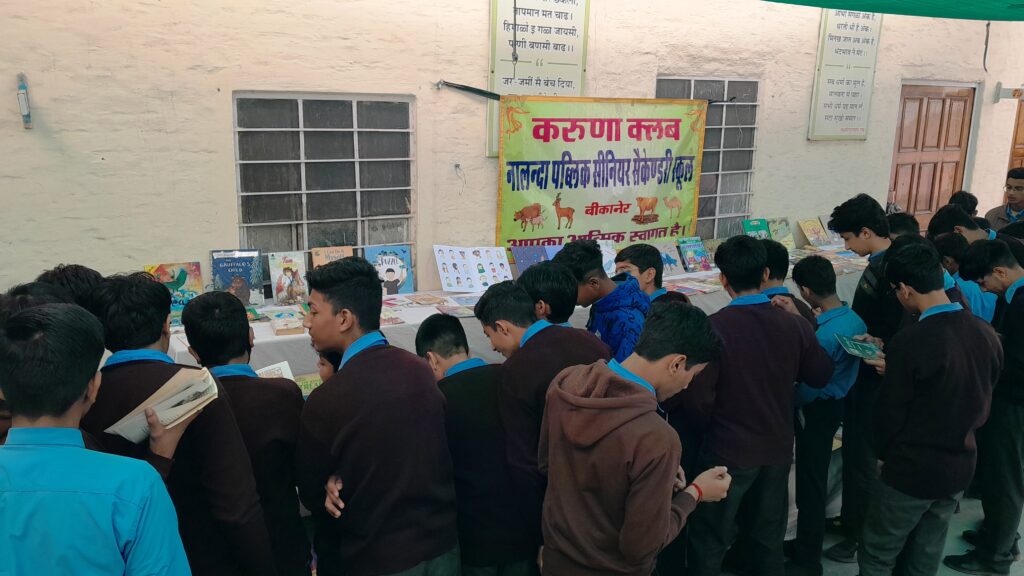
On February 15, a book exhibition showcasing the latest children’s literature was organized at the local Nalanda School, where students enthusiastically participated. The school administration fully supported the event and encouraged students to explore books. During the exhibition, students were introduced to the institution’s library and other literary activities, and they were invited to attend the dialogue session scheduled for the next day.
On February 16, 2025, a dialogue on “Children’s Literature: State and Direction” was held at the institution’s auditorium. Senior children’s literature author Asha Sharma emphasized that while a lot of children’s literature is being written today, the habit of reading is declining. She highlighted the need to go beyond textbooks and engage children in discussions on public platforms to foster their interest in literature.
Humorist Dr. Ajay Joshi discussed the challenges facing children’s literature, questioning whether literature is being written in a way that aligns with children’s interests and the language they prefer to read in. He urged children’s authors to focus on writing high-quality, engaging content that attracts young readers.
This event provided a meaningful platform for reflection on the significance and future of children’s literature, serving as an important step in inspiring children to develop a reading habit.

Shivraj Chhangani: First Death Anniversary Memorial Program (February 22, 2025)
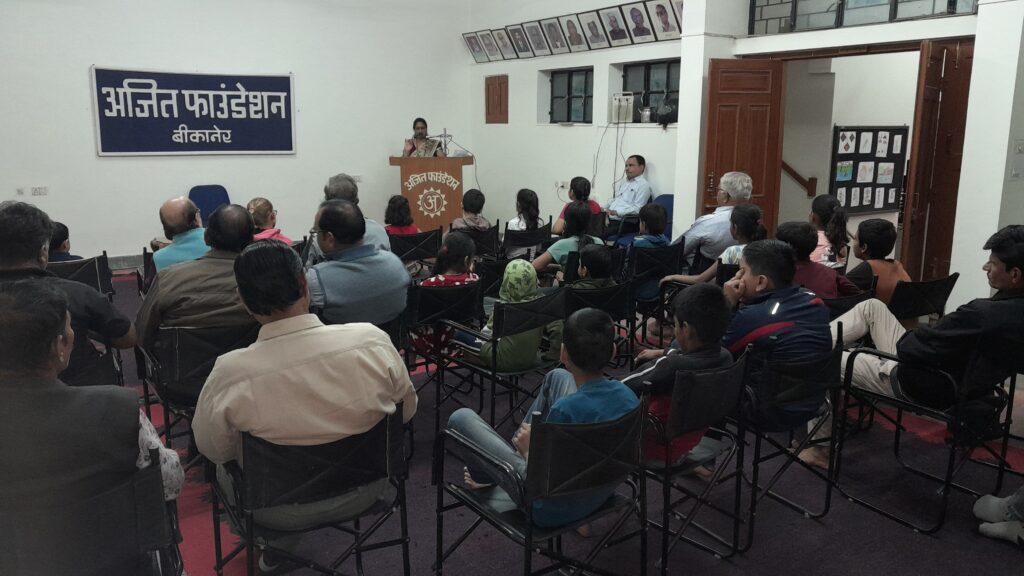
On the first death anniversary of eminent Rajasthani literary figure Shivraj Chhangani, a heartfelt memorial program was organized on February 22, 2025. Renowned Hindi and Rajasthani poet Dr. Krishna Acharya, speaking as the chief guest, highlighted Chhangani’s journey from the ordinary to the extraordinary, praising his humility and warmth. His powerful contributions to Rajasthani literature, particularly through his sketches, continue to hold a significant place. As an exceptional writer, editor, and former president of the Rajasthani Sahitya Akademi, Chhangani gave Rajasthani literature a unique identity, especially through his Kundaliyas. Many literary figures paid tribute to him, with young litterateur Jugal Kishore Purohit moving the audience through a self-composed song centered on the recognition of the Rajasthani language. Senior litterateur Rajaram Swarnkar described Chhangani’s unparalleled contributions, stating that the essence of his writings still spreads far and wide. Kamal Ranga called him an ideal personality, not just a great writer but a silent seeker. Poet Vishan Matwala compared him to the vast sky, where other writers shone like stars. Young poet Anand Chhangani mesmerized the audience with his poem “Kabhi Aao Kavita Mein,” dedicated to the late writer. This event fostered deep discussions on Rajasthani literature and Shivraj Chhangani’s enduring legacy, leaving a lasting impact on all attendees and ensuring that his writings continue to inspire literature lovers for generations to come.
Two-Day Program on Freedom Fighter Shaukat Usmani February 24-25, 2025
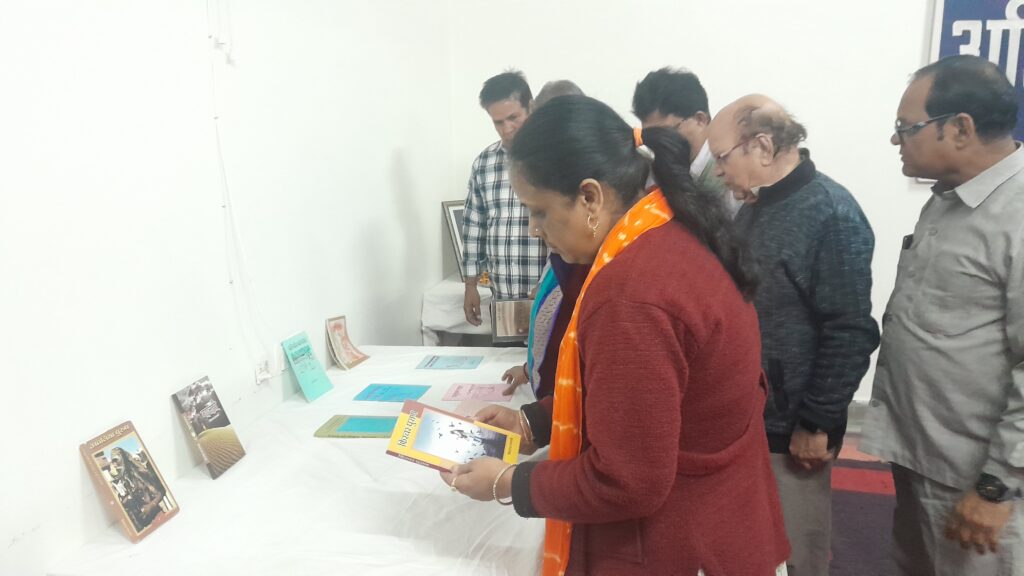
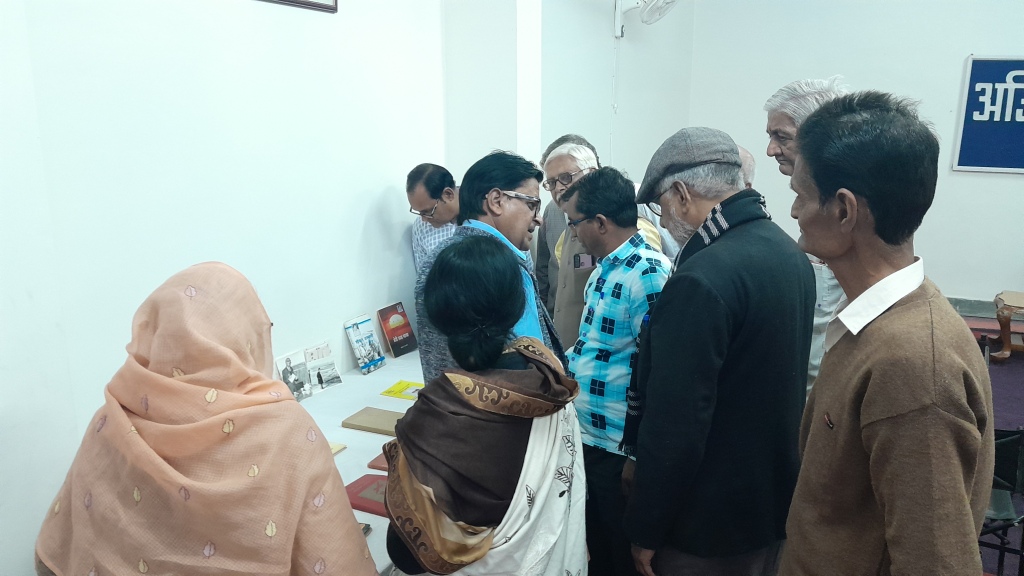
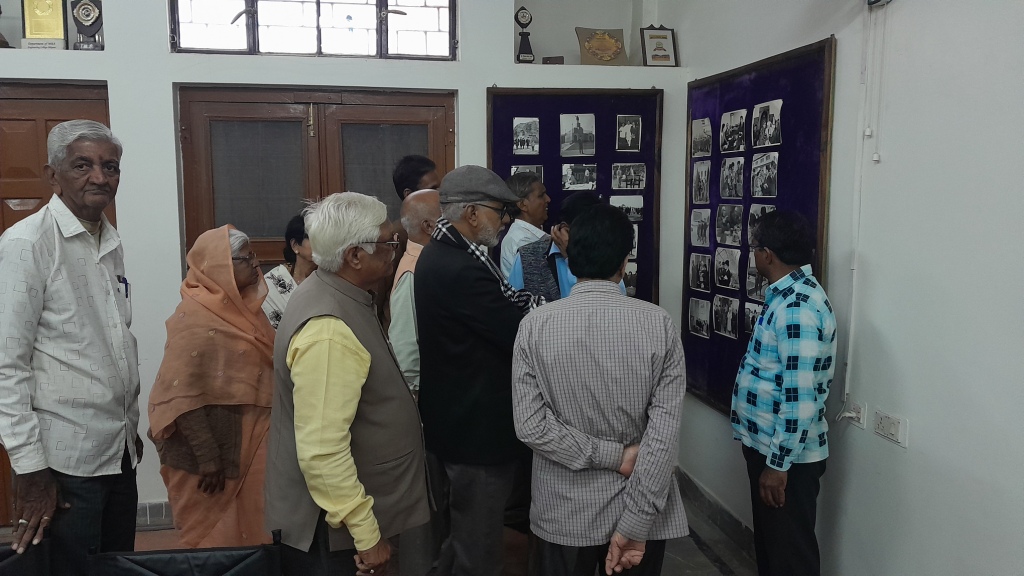
A two-day event, “Freedom Fighter: Shaukat Usmani,” was organized by the Ajit Foundation, beginning on February 24, 2025, with the inauguration of a book and photo exhibition by senior announcer of Akashvani Bikaner, Pramod Kumar Sharma. The exhibition showcased historical photographs related to the freedom movement, along with books written by and about Shaukat Usmani. This was followed by the broadcast of a radio feature by Urdu and Hindi literary figure Asad Ali ‘Asad,’ narrating Usmani’s journey from childhood to becoming a revolutionary. Presiding over the event, Pramod Kumar Sharma described Shaukat Usmani as a beacon of revolution and acknowledged his literary contributions. The exhibition was made possible with the support of Shaukat Usmani’s grandson, Salim Usmani. On February 25, 2025, a discussion session on “Shaukat Usmani: An Era” was held, where social activist Avinash Vyas highlighted Usmani’s struggles. He shared that Usmani, born in 1901, left Bikaner in 1920 and traveled through Afghanistan to Russia, where he connected with Indian revolutionaries. Arrested multiple times by the British government, Usmani spent a total of 16 years in prison. After independence, he lived in England and wrote extensively on social and revolutionary topics. Having left Bikaner in 1920, he returned in 1976 to a grand civic reception. This great freedom fighter bid farewell to the world on February 26, 1978.
January 2025
Mohammad Usman Arif: Literature, Society, and Memories: January 10 to 13, 2025
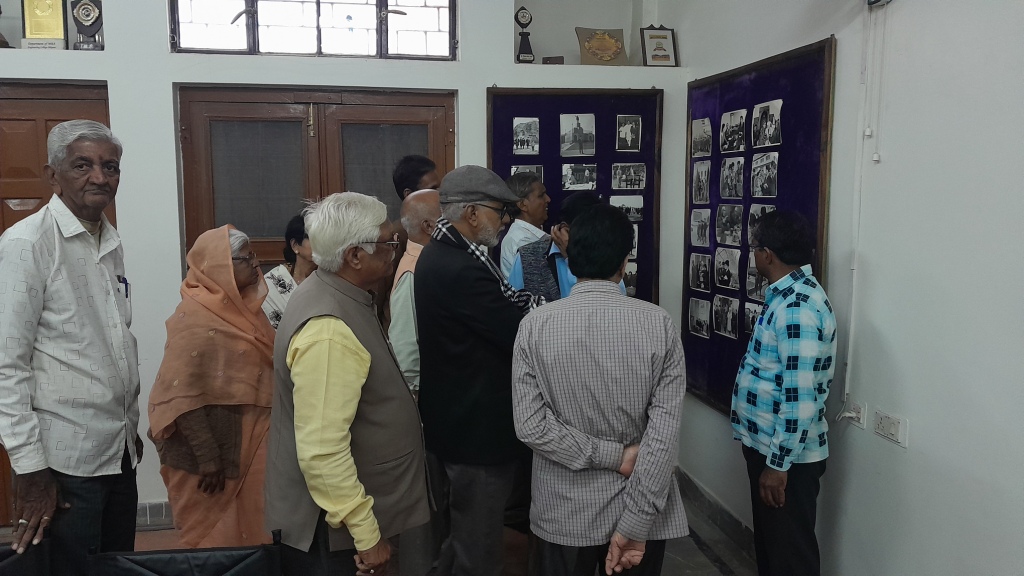
Ajit Foundation organized an exhibition from January 10 to 13, 2025, showcasing the literary works and rare photographs of renowned writer and former Governor of Uttar Pradesh, Mohammad Usman Arif. The event was inaugurated by Prof. Bhanwar Bhadani, who highlighted Arif’s literary contributions to social awareness and patriotism. Writers from Bikaner recited his poetry and ghazals, with participation from his family members. On January 12, a lecture on “Mohammad Usman Arif: A Torchbearer of Urdu” was held, discussing his impact on literature and society. Concluding the event, Dr. Fakhrunnisa emphasized his invaluable contributions to literature, education, and politics, advocating for an award

Women’s Writing and Society: Creation, Struggle, and Dialogue: January 18-19, 2025
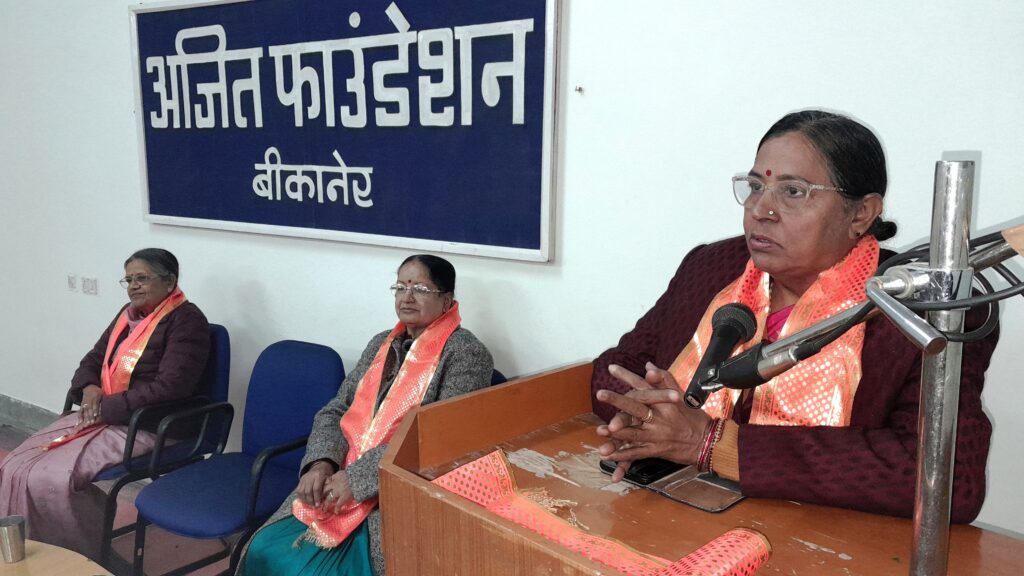
Ajit Foundation organized a two-day event on “Women’s Writing and Society” on January 18-19, 2025. On the first day, an exhibition of books by women poets was held at the community library, inaugurated by renowned writer Dr. Krishna Acharya. On January 19, a lecture was conducted, with Dr. Basanti Harsh as the keynote speaker. She highlighted the significant role of women in literature across various genres, despite societal challenges. Dr. Krishna Acharya emphasized the historical importance of women’s creativity and its impact on society. Senior writer Saroj Bhati introduced the topic, stating that from the Vedic era to the present, women’s writing has shaped literature and continues to be a powerful force for change.
December 2024
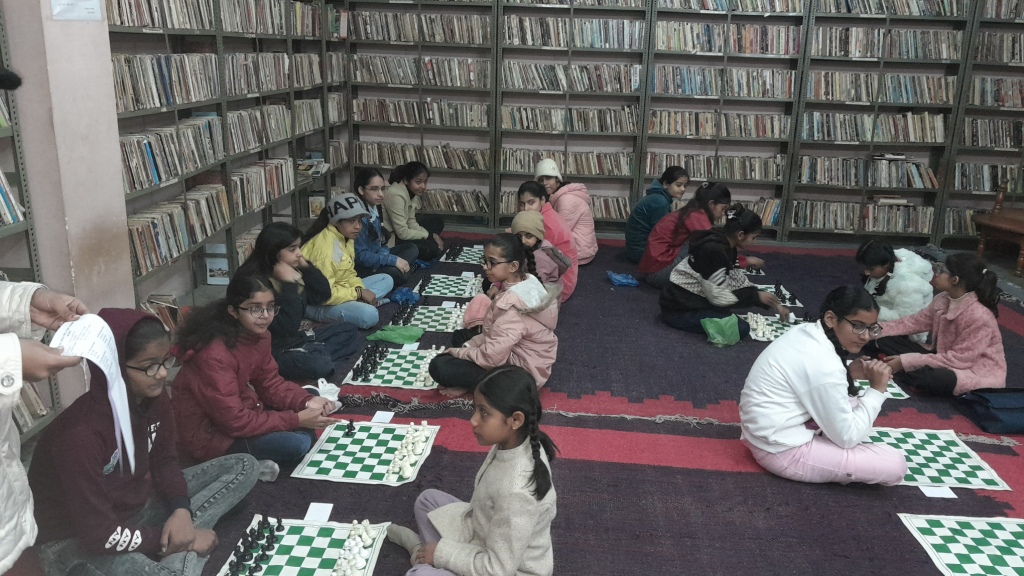
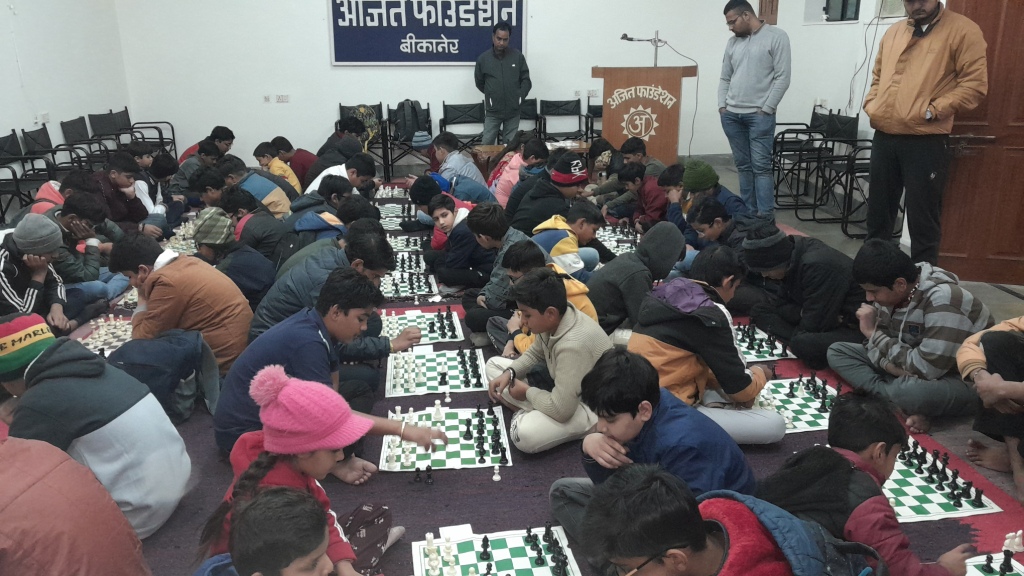
District Level School Chess Tournament 2024: December 30 – 31st 2024
The Ajit Foundation successfully organized its 20th annual District Level School Chess Tournament on December 30th and 31st, 2024. This prestigious event has been a cornerstone of youth chess development in the region for the past two decades.
Opening Ceremony
The tournament was inaugurated by distinguished guests including renowned chess trainer Shankarlal Harsh, senior chess player Anil Boda, young medical practitioner Dr. Pravin Prajapat, and youth chess player Akshay Vyas.
Presiding over the inauguration, chess player and trainer Shankarlal Harsh highlighted India’s growing dominance in the chess world. He noted how India has dramatically improved its position in global chess rankings, moving from lower ranks to now being counted among the top nations.
Expert Insights
Distinguished chess trainer Anil Boda emphasized the direct correlation between chess and a child’s holistic development. He explained how the game enhances mathematical abilities and shared detailed insights about chess techniques and notation with the young participants.
Dr. Pravin Prajapat, the chief guest, spoke about the mental and physical health benefits of chess, describing it as a pathway to success in life. Youth chess player Akshay Vyas added that chess is a game of complete discipline that tests intelligence and prepares individuals to face life’s challenges.
Closing Ceremony
The closing ceremony was graced by Naresh Shrimali, Private Secretary to the Inspector General of Police, Bikaner Division. In his address, he encouraged participants to learn from their mistakes rather than getting discouraged by defeats.
Dr. Krishna Acharya, the chief guest at the closing ceremony, emphasized the importance of parent-child communication and the role of educational storytelling in building character.
Tournament Results
Boys’ Category
- First Place: Team from Perfect Chess Academy (Uday, Khushal, and Gaurav Poonia)
- Second Place: Team from Krishna Public School, Udayramsar (Kishan Pancharia, Mahesh, and Amit Jakhad)
Girls’ Category
- Winners (Running Trophy): Kavi Hriday Chess Academy team (Nancy Boda, Heer Tanwar, and Kirti Vyas)
- Runners-up: Government Harso Ka Chauk team (Anjali Vyas, Monika Upadhyay, and Rajni Kumari)
Participation Overview
The tournament saw an impressive turnout with 100 participants:
- Boys’ Category: 79 participants
- Girls’ Category: 21 participants
All participants were honored with prizes, recognizing their enthusiasm and participation in this prestigious event.
The tournament’s success reflects the growing interest in chess among school students and reinforces the Ajit Foundation’s commitment to nurturing young chess talent in the district.
Celebrating the work of Harish Bhadhani 19-24 December 2024
Harish Bhadani (1933 – 2009), a well-known poet from Bikaner and friend of the Ajit Foundation, was commemorated in a week-long program at Ajit Foundation. The program featured Bhadani’s books and photo exhibition, inaugurated by poet Saral Vishaarad, artist Sannu Harsh, and social activist Kavita Vyas. A lecture titled “Harish Bhadani: Through the Window of Memories” was delivered by prominent Hindi and Rajasthani literary figure Malchand Tiwari on December 22, 2024. Tiwari shared his first meeting with Bhadani at a Hindi promotion committee event in Sri Dungargarh and discussed Bhadani’s poetic legacy, noting:His work contained philosophical inquiries and spirituality He preferred writing songs as he believed they were most communicative. He developed a unique linguistic style, often breaking free from traditional Hindi grammar rulesHis work contained philosophical inquiries and spirituality The program also included a screening of Harish Bhadani’s YouTube interview on December 21, 2024.

July 2024


Art and Craft Workshop


Chess workshop


Theatre workshop
May 2024


Drawing workshop, May 2024
 English
  Hindi
Hindi